Fillmore Glen became a state park thanks to the efforts of Charles Atwood. He recognized the beauty and importance of maintaining a place like this for years to come. His efforts began in 1919; finally in June 1925 the 941 acres was recognized as a state park. It is named Fillmore Glen State Park in honor of US President Fillmore.
I appreciate his interest in protecting this land!
Visitors can hike the north, south or gorge trail and easily make a 3 mile loop as we did. On the south rim trail we observed many mushrooms … so different from my home desert environment… and completed our loop on the gorge trail.
Wow! Gorge trail is spectacular with waterfalls. Plenty of water was running and falling! We walked in a narrow, steep-walled gorge under trees and protected from the summer heat. It was wonderful and not muddy or buggy.
Trail and bridges
People can hike, camp, swim in the designated area and fish at the Owasco Lake inlet. Nature Conservancy is also involved in protecting this watershed.
If you are near Moravia, New York, this is definitely a park to visit!
One of 5 waterfalls at this park!
Next blog post I photographed different types of fungi!!! Will share.
Did you know Tucson, Arizona was the first recognized UNESCO City of Gastronomy … part of the UNESCO Creative Cities Network? I did not.
Tucson, Arizona (UNESCO designation in 2015) and San Antonio, Texas (UNESCO designation in 2017) are the only two American cities that have been designated Cities of Gastronomy. Both are multicultural communities with culinary creativeness and deep agricultural heritage. Search the topic and you’ll see an updated list with many other cities around the world with this designation!
We enjoy Indigenous and Mexican foods here at Tucson restaurants, thus I understand its UNESCO designation. The heritage crops of the past 4,000 year we’d taste: squash, chilies, tepary beans and white Sonoran wheat. Plus there are festivals such as the Agave Heritage Festival. Let’s not forget Sonoran hotdog food trucks … a must here at parking lots or some farmer’s markets.
So if you visit Tucson, zero in on restaurants featuring the foods that have long been here and enjoy! Start your meal with tortilla chips and salsa or guacamole!! At least that’s how I start my meals😀
Love chips … now do I want hot, spicy salsa or guacamole?
While visiting a friend who loves birds too, I noticed a bird feeder in the backyard. This one though is quite different from others I’ve seen. These bird feeders are solar-powered and with a camera. The camera captures a video of the bird(s) while they feed at the feeder. Cool!
Ruby-throated hummingbird was seen head-on as it slurped the sugary mixture. Wow, few times do we see them from that angle! That feeder is designed especially for hummers. Another feeder had seeds where sparrows and other birds frequented.
Birdbuddy feeder with camera!
If interested in seeing more about these smart bird feeders, check out: https://www.mybirdbuddy.com (I have no affiliation with this company. Do your research to find best deal if you go the purchasing route.) It was fun seeing birds at the feeders and watching the videos on my friend’s phone app. One gets to see a bird close-up and in action! Cool!
Recently I saw a new, to me, sign with an important message!
Look!
I was in Nashville, Tennessee and saw this sign while standing at a road intersection. The traffic light would soon change and the walk light will come on counting down the seconds for me to cross the road. However, this sign reminds all of us of the importance in looking into the driver’s eyes to see that he or she sees you. I came to realize that an electrical box was blocking their view of me! Glad I looked!
Here’s a museum when you’re driving Interstate 40 east and needing a break in Oklahoma? Route 66 Museum is in Clinton, Oklahoma, a few miles north of the interstate and worth a visit!
Enter Route 66 Museum
The history about this road’s creation is fascinating and the museum shares it all. The 1920’s is when the concept of driving a road from Illinois to California comes into its own. Nine thousand registered OK drivers in 1914 grew to 144,000 in 1920, then to 576,000 in 1930. More people driving meant gas stations, cafes and motels were needed for travelers. The migration of people in the 1930’s due to the lack of rain, the Dust Bowl, increased the use of the “mother road”, Route 66, as many headed west!
Henry Ford’s Model T in 1916
Thanks to Cyrus Avery in envisioning such a road, the WPA workers building the road and the business owners along the road providing services to travelers. Unfortunately with President Eisenhower’s Interstate Plan, many towns were bypassed and Route 66 roads were not used. However as we now drive the interstate, there are some people who do drive as much of the old 2448 mile road where possible through the 8 states from Chicago, Illinois to Santa Monica Pier in California.
Some old stations can still be seenRemember? Pay here to park.Map of the road; now some people cycle it!
You too may stop at Cadillac Ranch by Amarillo, Texas. Cadillacs from 1949-1963 are part of a 1974 installation. The cars are nose-dived into the ground and you can walk up to them and add your spray paint or creative touch!
I have driven and cycled parts of Route 66 and love seeing the old motels, gas pumps, etc. Go out and “get your kicks” on Route 66!
I did not know of the Navajo County Museum in Holbrook, Arizona. Yes, I knew Petrified Forest National Park is down the road, but this museum? No. As the local said to me, “Once you see the national park and this museum, you’ve seen Holbrook!”
Wild West
We spent at least 45 minutes at the Navajo County Museum walking through rooms with different historical info. This building was the old courthouse with the sheriff’s office and jail. Other rooms included items from Native Americans, ranchers and other settlers in the county. I had never seen so many old typewriters and cameras in one place. Display cases had fossils, arrowheads, pieces of pottery and old horse saddles. One room was the old post office. There was so much to look at!
Plenty of exhibits
We just happened upon this place as we continue our drive east with many more miles to go in the day. Lovers of history could spend hours here with all this historical material.
Old post office
So … If you are in Holbrook, Arizona along Interstate 40, visit the Navajo County Museum. And if you have not been to Petrified Forest National Park, get there also to see petrified wood and the “painted desert”. Worth a stop!!
Petrified wood and more of it at the national park down the road!
Exercising while traveling has its challenges. Yet older travelers may say, as we age, exercising anytime has its challenges. It’s surely not like what we accomplished decades ago. When we travel though, our daily timeline varies so much we need to work at finding time to fit in any exercise … and that’s not always easy!
Our cardio days, strength training days, and rest day per week becomes a jumbled mess while traveling. A poor night’s sleep, driving weariness, change in eating plan, dehydration and whatever else can lead to lack of interest in doing a workout of any sort, let alone trying to find time to fit it in!
But here are a few of ideas to consider if you want to do any exercise/workout. At least these are what I tell myself to consider … as I have this challenge too:
Take a walk after every meal. Got more time? Walk further and/or faster.
Use luggage as weights. Can bicep curls or tricep extensions with hand luggage be accomplished? Or chest press or shoulder press with larger luggage?
Use own body weight for squats, planks or yoga poses.
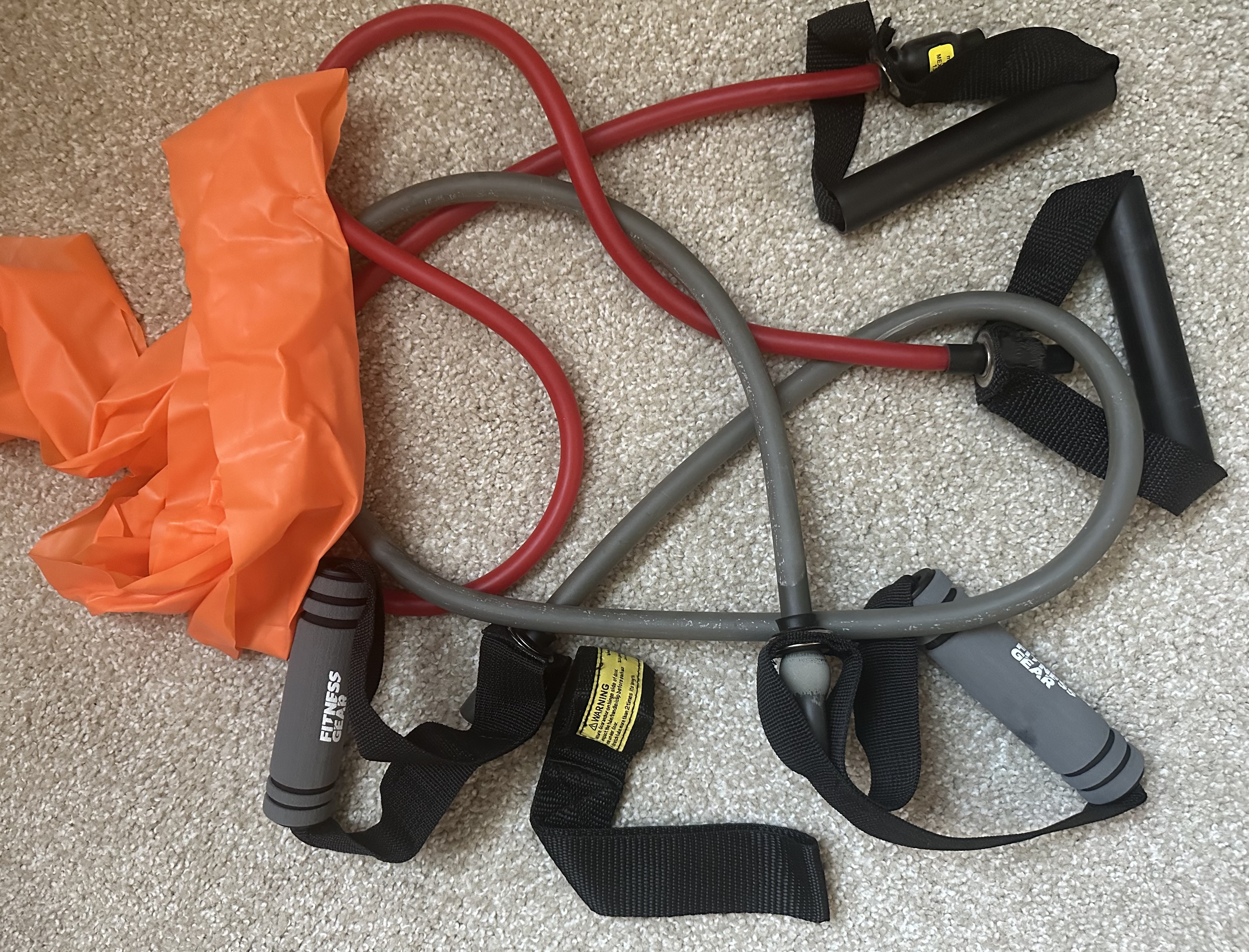
Use exercise tubes and/or straps for strength training.
Access to a pool, swim; a jump rope, jump; a canoe; paddle away! Ask: what’s at this new town/park/environment providing me a way to be active?
Realizing that maintaining a level of fitness while we travel is a challenge is an important start. Sitting/driving a vehicle for hours, often eating more food and not getting our best sleep is often part of travel. But our bodies need to be active, hydrated and strong to travel as we wish!
My goal is to travel the world, thus I need a healthy body for the miles ahead! I’ll find time each day to do something active. Of course, I love trips where I bicycle or hike each day. Unfortunately my upcoming 2 month road trip will not include any bicycling, but maybe some hikes. What exercise(s) do you do when you travel? How do you stay active? Got a favorite full body exercise? Please share!
PS. I am reminded of an 84 year old woman who walked a half hour before breakfast every morning as she travelled for 6 weeks with our tour group. Why can’t I do that for starters! Our group was in awe of her and she motivated us to get moving in the morning! That’s a start!
Strap and tubes for strength training are my go-to pieces of equipment.
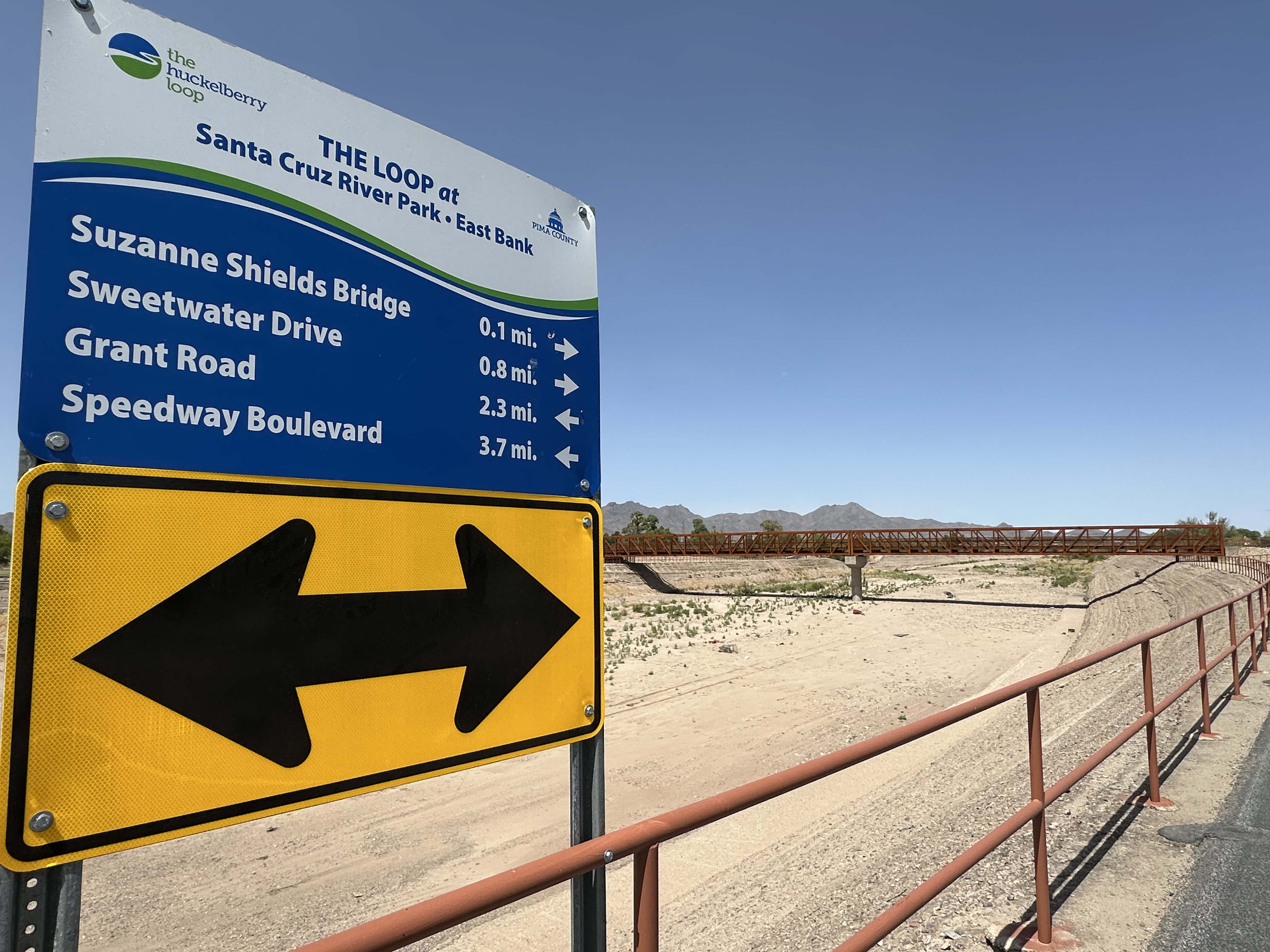
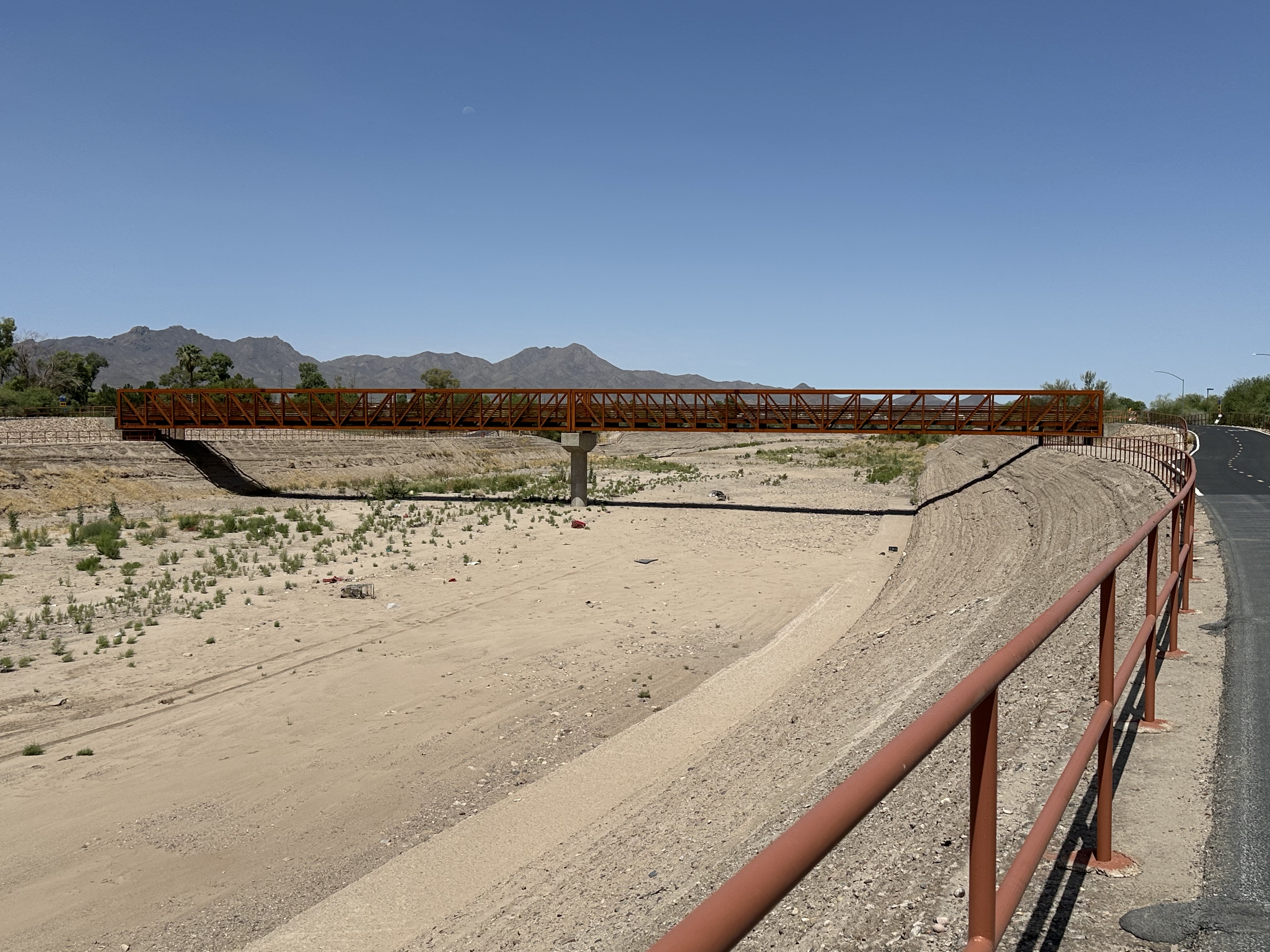
The new pedestrian bridge has been here for a year and I wondered if you have seen or made use of it? People who walk or bicycle ride on the Huckelberry Loop now have a faster way to get across the Santa Cruz River. It’s near Sweetwater Wetlands and Danny Lopez Park. For people on the west side of town, this bridge provides a safe way to travel from one segment of the loop to another. It’s called Suzanne Shields Pedestrian Bridge. Who was Suzanne Shields?
Bridge across Santa Cruz River, Tucson, AZ
Suzanne Shields was Pima County Flood Control District’s first hydrologist in 1979 and the first director of the flood control district when formed in 2005. The bridge was not only built for recreational activities, walking and cycling, but also to maintain the Santa Cruz River. Construction crews raised the bank protection so the bridge had enough height allowing flood waters to go unimpeded below. It is the first bridge flood control built over the Santa Cruz River spanning over 300 feet and 18 feet wide. We’re having hot days now; few people were there today. I’ll bet early morning hours and once temperatures cool down there will be many enjoying the safe pathway. See you there!
We visited friends who crank out their pasta-making machine every so often to make pasta, yet I had never been there when they did. Well this time, especially after my couple of pasta-making classes in Italy and Croatia, we decided to make pasta at their home. What did I learn in those classes? I put myself to the test.
Four eggs and 2 cups of 00 Italian flour and mix. My biggest challenge is always kneading the dough enough. Muscle into the dough, fold it over, quarter turn and knead it again…. and again …. Everyone else seems to know when it is quite ready to call it quits with the kneading, so I follow their direction. Let the dough rest, then time to make the noodles. Flattened the dough as thin as we can get it. My friends used their machine and I rolled my pasta by hand and roller.
Pasta-making machine
Hand-rolling to make pasta
A sauce was made with garlic, cherry tomatoes and parsley. A sauce cannot get any simpler than this. When put on the pasta, shave some parmesan cheese on and it’s all delicious!
Prepping for the sauce.
We cut the pasta into strips. My hand-rolled and cut noodles cooked in 5 minutes. The pasta flattened by the machine cooked in 3 minutes. Our sauce was simple and delicious … and enjoyed by everyone so quickly, I forgot to take a final photo! Next time!;)
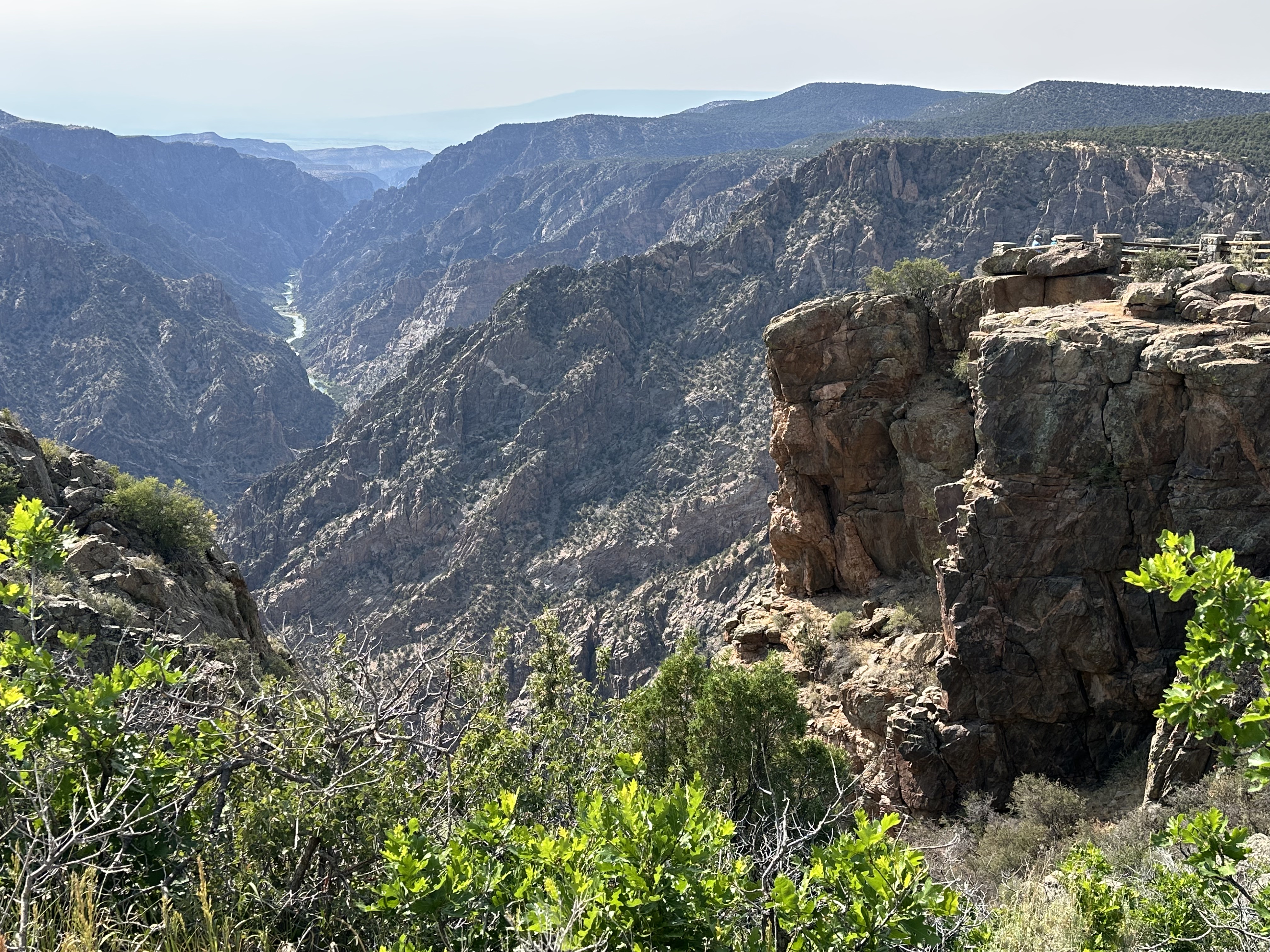
Black Canyon at Gunnison National Park is a place I never visited. So when east coast friends mentioned visiting this Colorado national park, I thought well why not meet them there! Wow, that was a good decision!
We drove the south rim road at this national park after a stop at the visitor center which survived a 2025 wildfire here. From the rim’s vista points, it is easy to understand why this park is called the Black Canyon of the Gunnison National Park. Looking down the sheer, black canyon walls at nearly 2 billion year old rock, you will eventually see a river 1800 feet below! The walls are massive and it is amazing to realize the river had cut through the uplift’s core of rock a couple of million years ago.
View from south rim road
From Sunset viewpoint
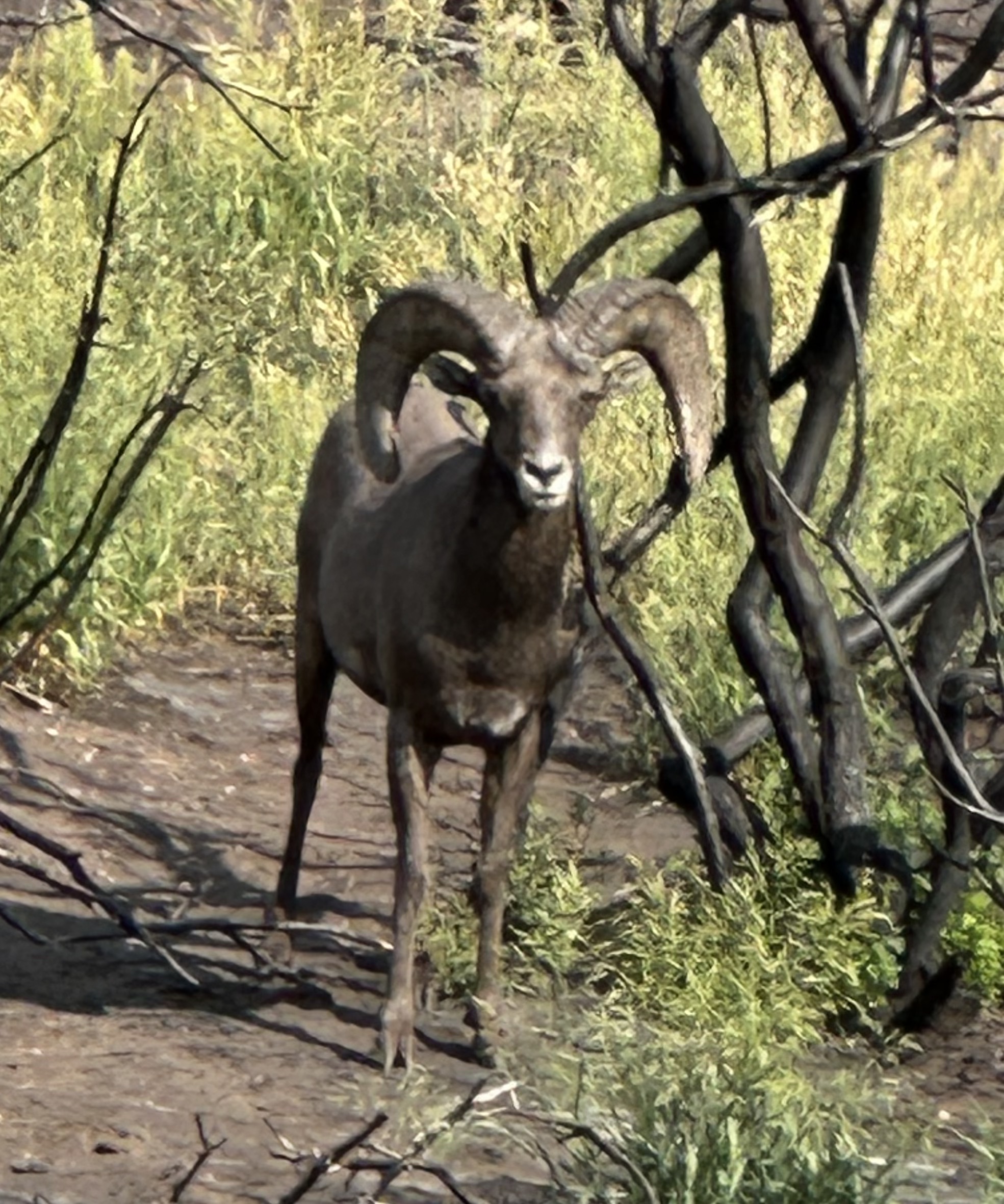
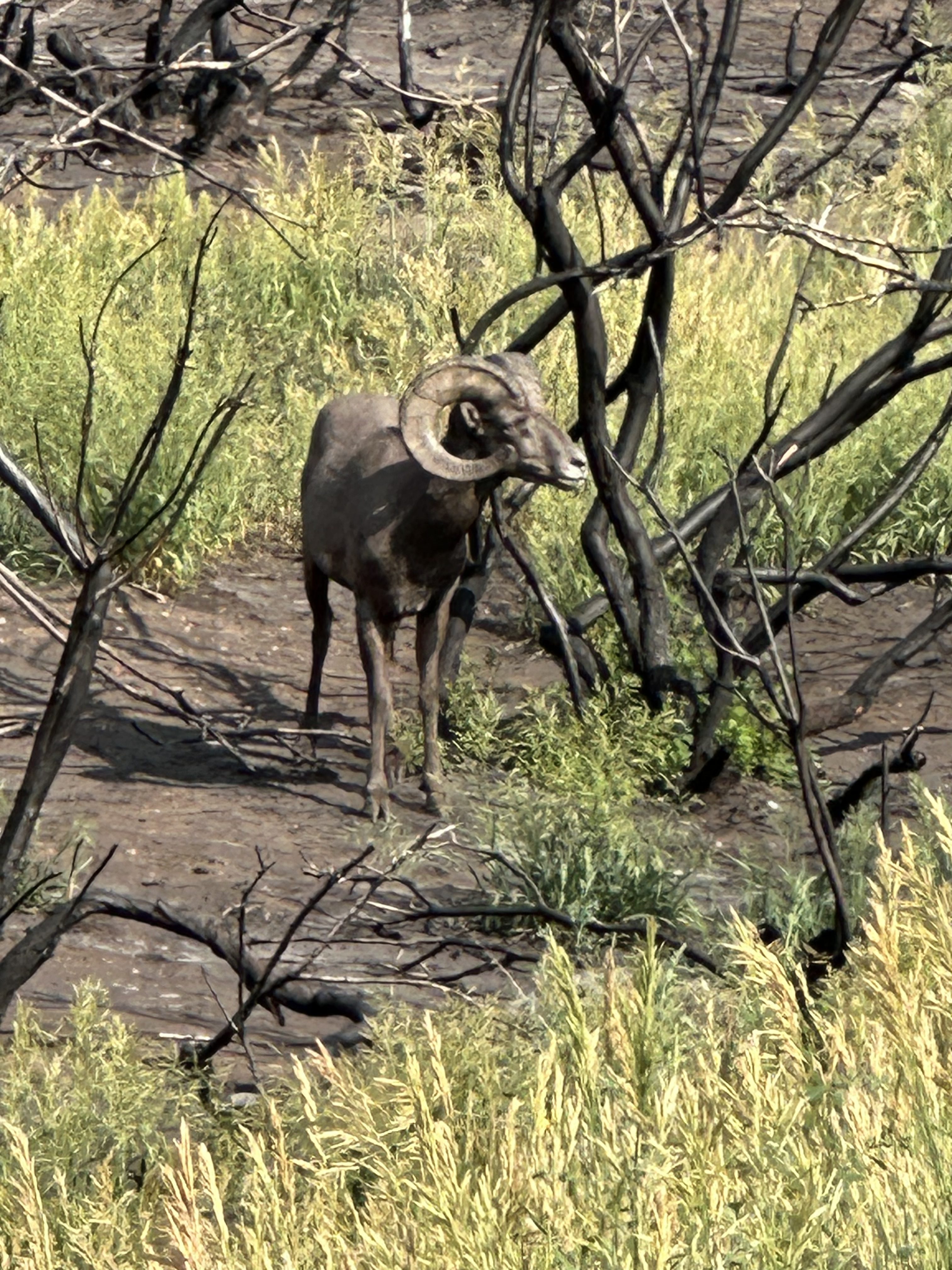
While still on the south rim road, we saw three big horn sheep walk from the rim, across the road to another location.
We kept our distance from the wildlife.
They moved on!
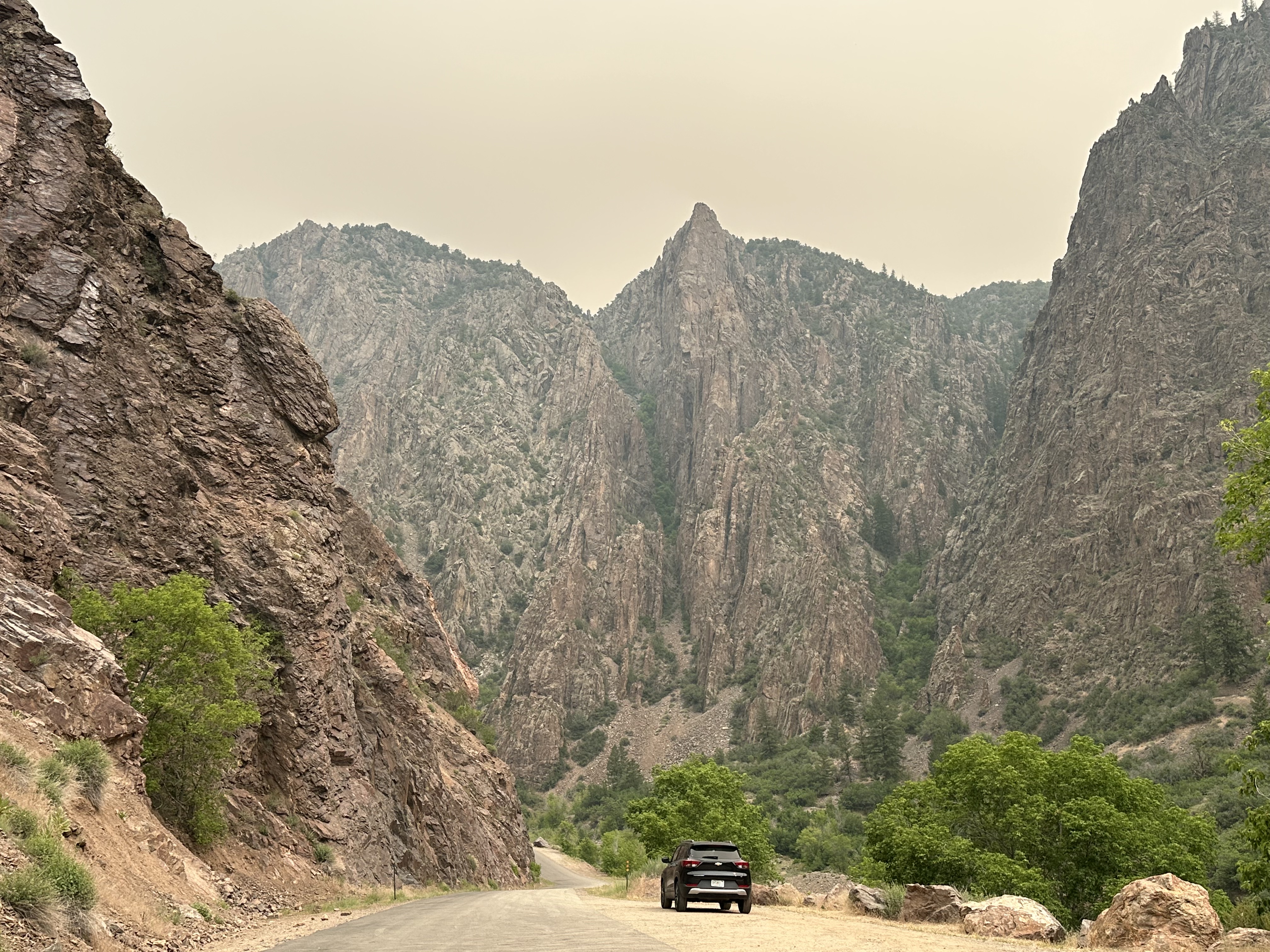
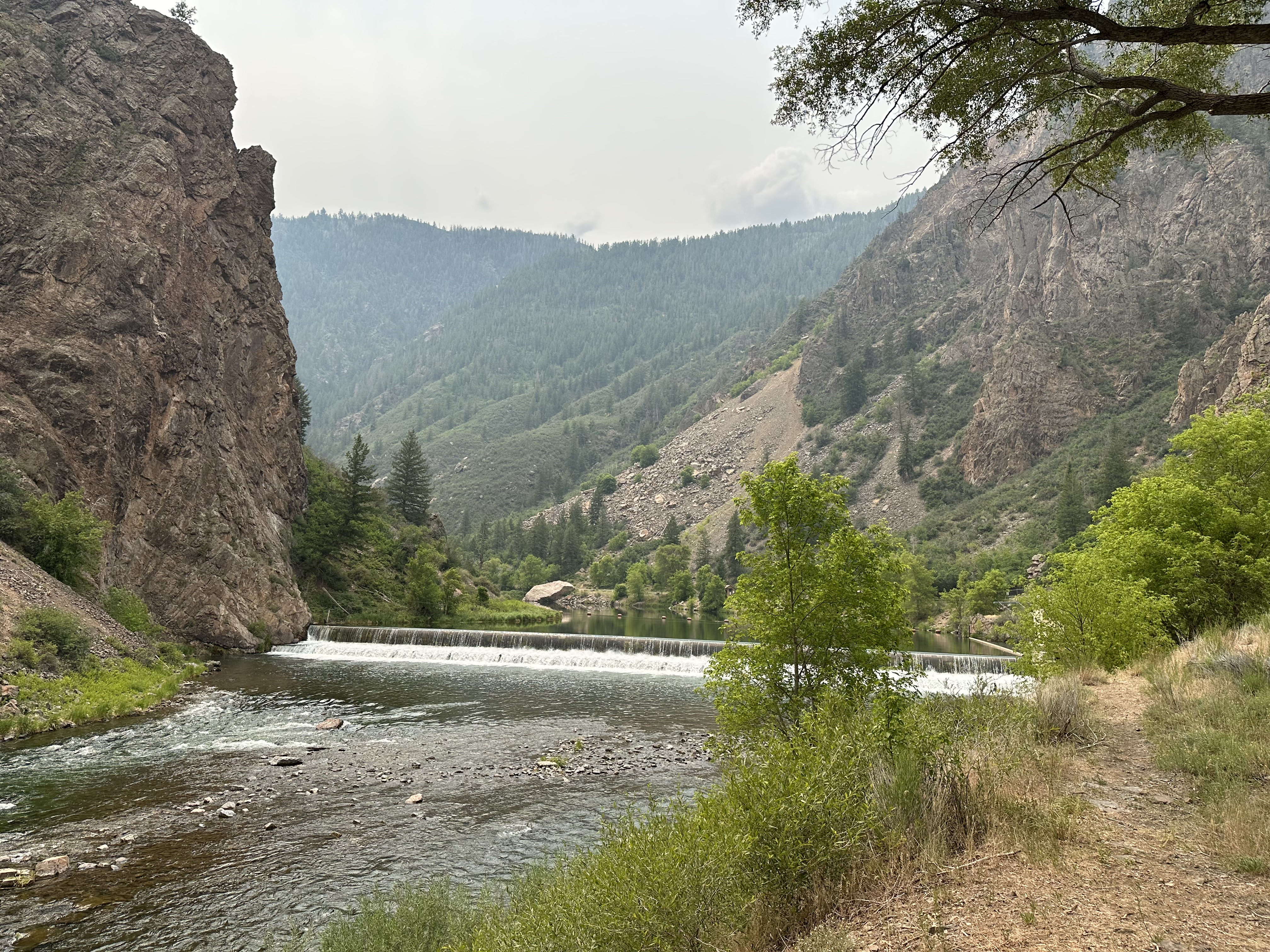
We also drove the east portal road. There we read signage about the Gunnison Tunnel and diversion dam built between 1905 and 1909. Want to know about a major engineering project, I encourage you to read its history! We walked the road paralleling the Gunnison River which dead ends at Crystal Dam. Looking up on the massive rock walls was truly a different perspective!
Also notice the hazy sky from wildfire smoke coming from Utah, many miles away.