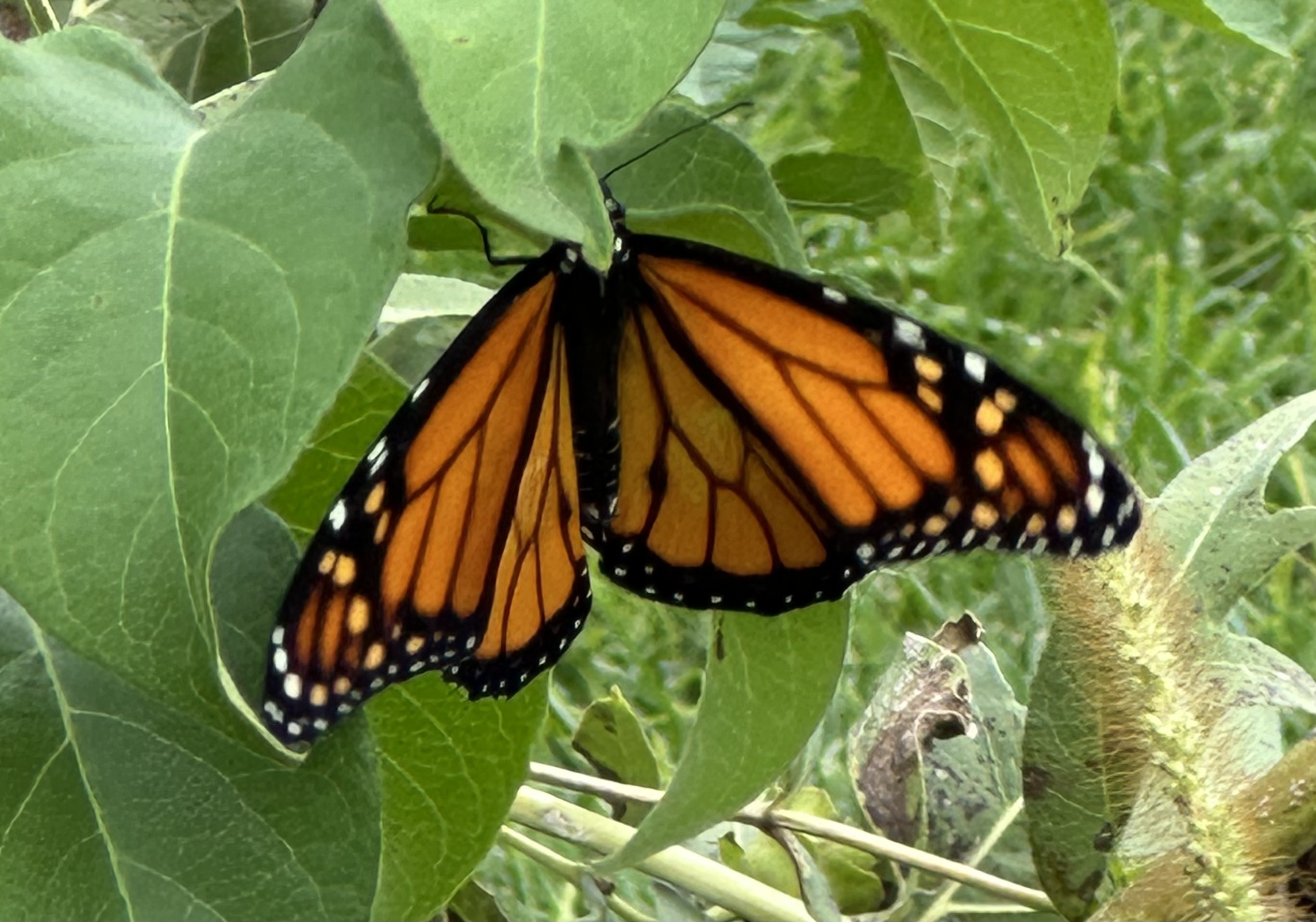
Impressive Monarch Butterfly Migration!

A male monarch butterfly

Let’s zero in on the monarch butterflies on the eastern side of the Rocky Mountains. These butterflies migrate 3,000 miles from North America to Central Mexico! (Those west of the Rocky Mountains migrate a shorter distance from California to Mexico.)

Anyway, I started to be fascinated about the monarch butterfly migration after a stop at Crane Trust Nature and Visitor Center in Wood River, Nebraska. The last time I visited here it was a March day during sandhill crane migration. But on this visit now, I was learning how to tag monarch butterflies. A very patient director of the center explained to all of us assembled how to catch then tag a monarch butterfly. Then we had an opportunity to give it all a try.

How to hold a butterfly without hurting it.
Measurements were going to be taken and recorded.
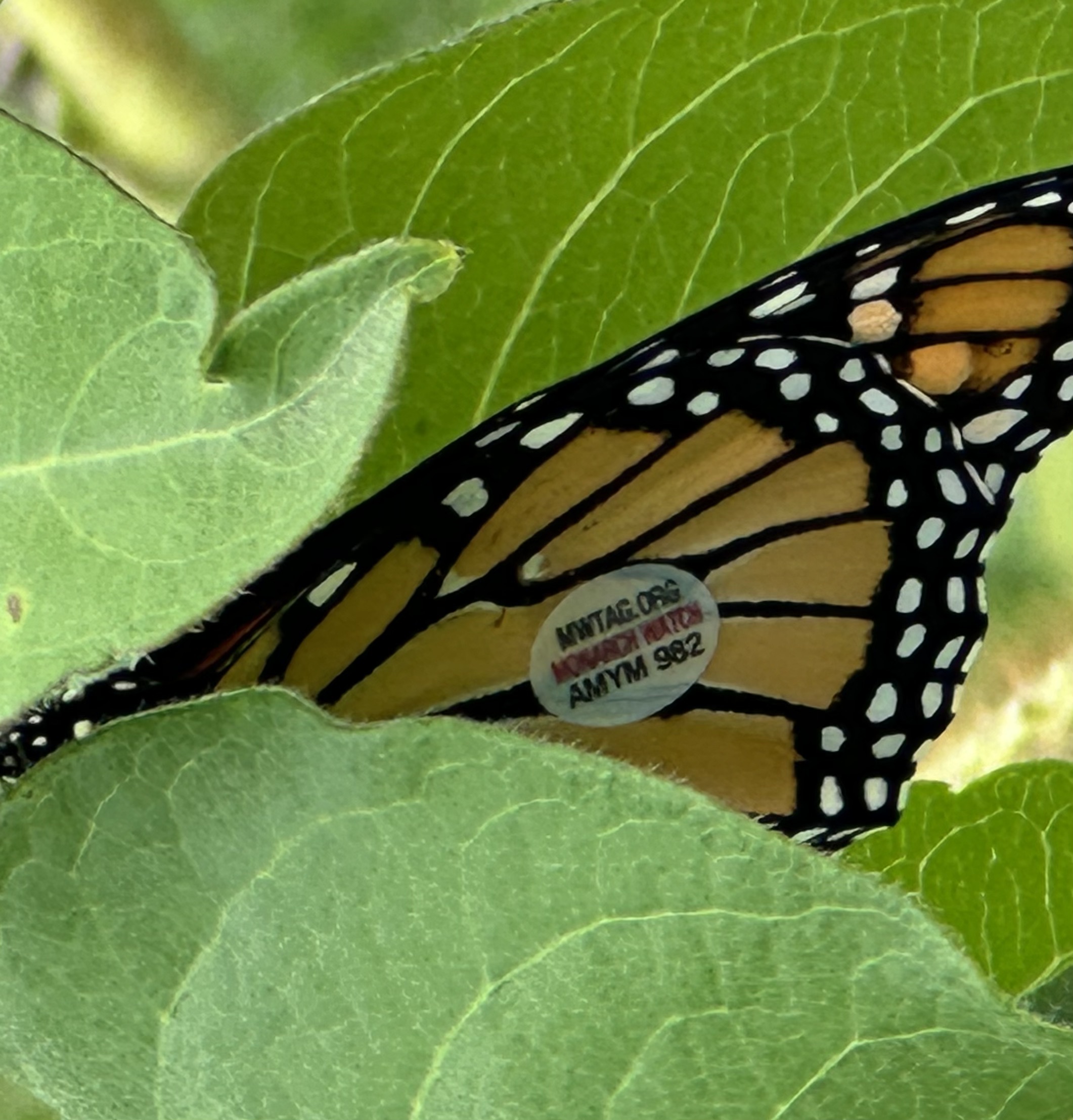
Later, I found a monarch butterfly in a shrub … and it had a tag on it!

I also learned about two apps: Monarch Watch where you’ll see over a million monarch butterflies tagged. At this app you submit your tagging data or report found tags. The other app: Project Monarch is where they use the smallest transmitters to track monarchs. The website: https://celltracktech.com is very informative about the use of the technology just in the last couple of years! I’m following two monarch butterflies at the Project Monarch app and see many more across the USA. My recommendation is to check both apps! All of it is fascinating.

The other amazing thing I learned is the life cycle of the monarch butterfly through the different generations. I have planted milkweed plants hoping to do my part in their growth, but I needed to understand how and when it is that these butterflies fly the great distances. Here is my understanding in a nutshell: 

Monarch butterflies only live 2 – 6 weeks during the summer as adults. In mid-August though, the migratory generation can live up to 9 months. It’s these monarchs that emerge, do not reproduce and begin their migration south to an overwintering site they have never been to in Central Mexico! By early November they arrive in the oyamel fir trees on the south and southwest facing mountain slopes. Here they survive the winter. (Some day I will get to Mexico to see the butterflies in the trees!)

In March, these butterflies travel to Texas and southern states, lay eggs and feed as they migrate and breed. This first generation from the overwintering population continues the journey north in late April and May. Second and third generations populate breeding grounds during the summer. It’s the fourth generation beginning in mid-August to be the non-reproducing ones heading south to the over-wintering site. Amazing!!

So I will learn more about monarch butterflies as they roost in Central Mexico this winter. And I’ll look forward to seeing or detecting tags and/or transmitters next spring! Wow, what a fun activity to learn more about!

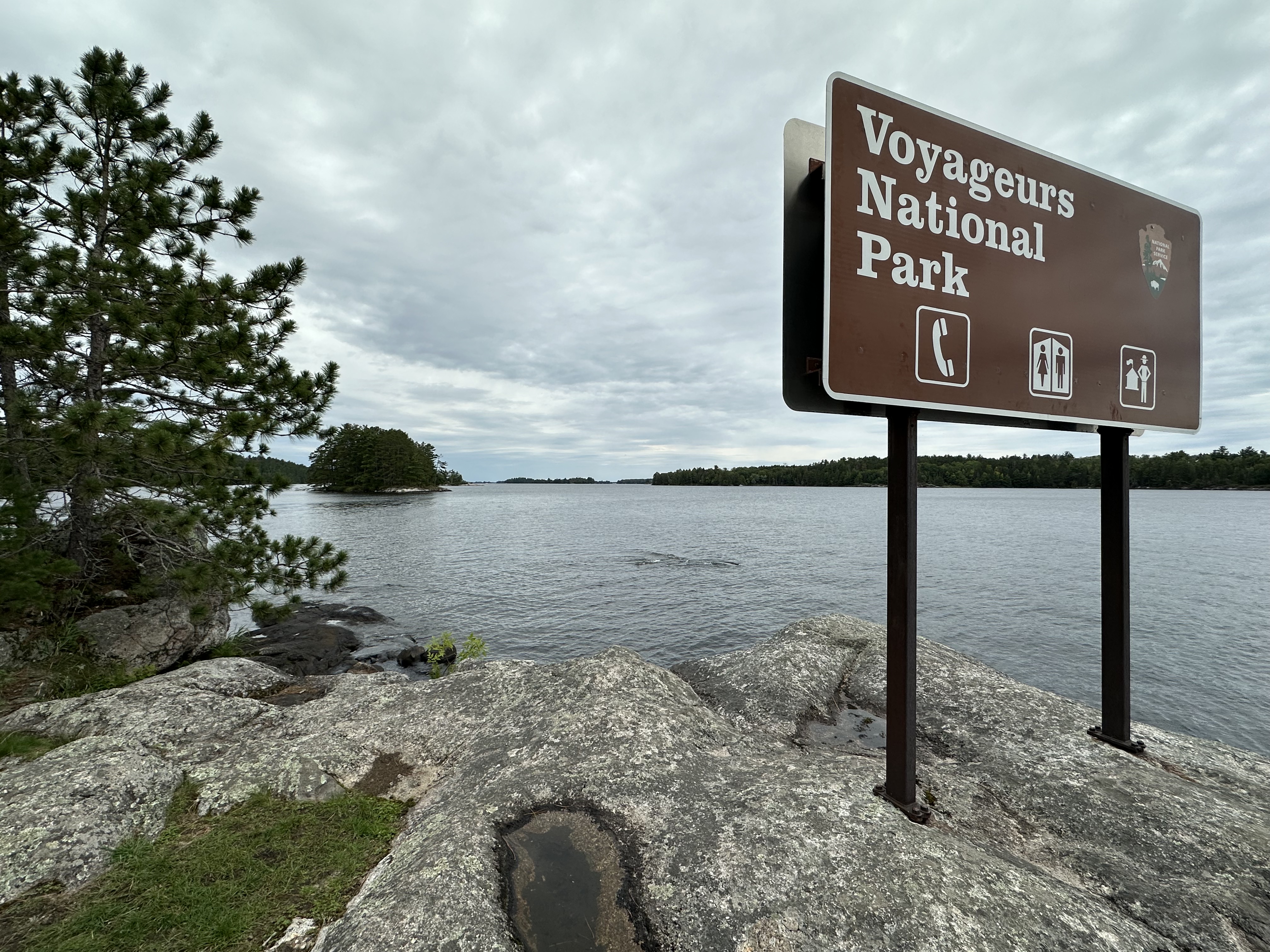
Voyageurs National Park, Minnesota!

Finally arrived at another national park new to me! The last few years I had been smoked out by Canadian wildfires so I never arrived this far north in Minnesota. Now I am here and yet, the best way to really enjoy this national park would be on a houseboat or canoeing around and visiting different islands. Another time; for now our feet for the most part were to be standing on land.

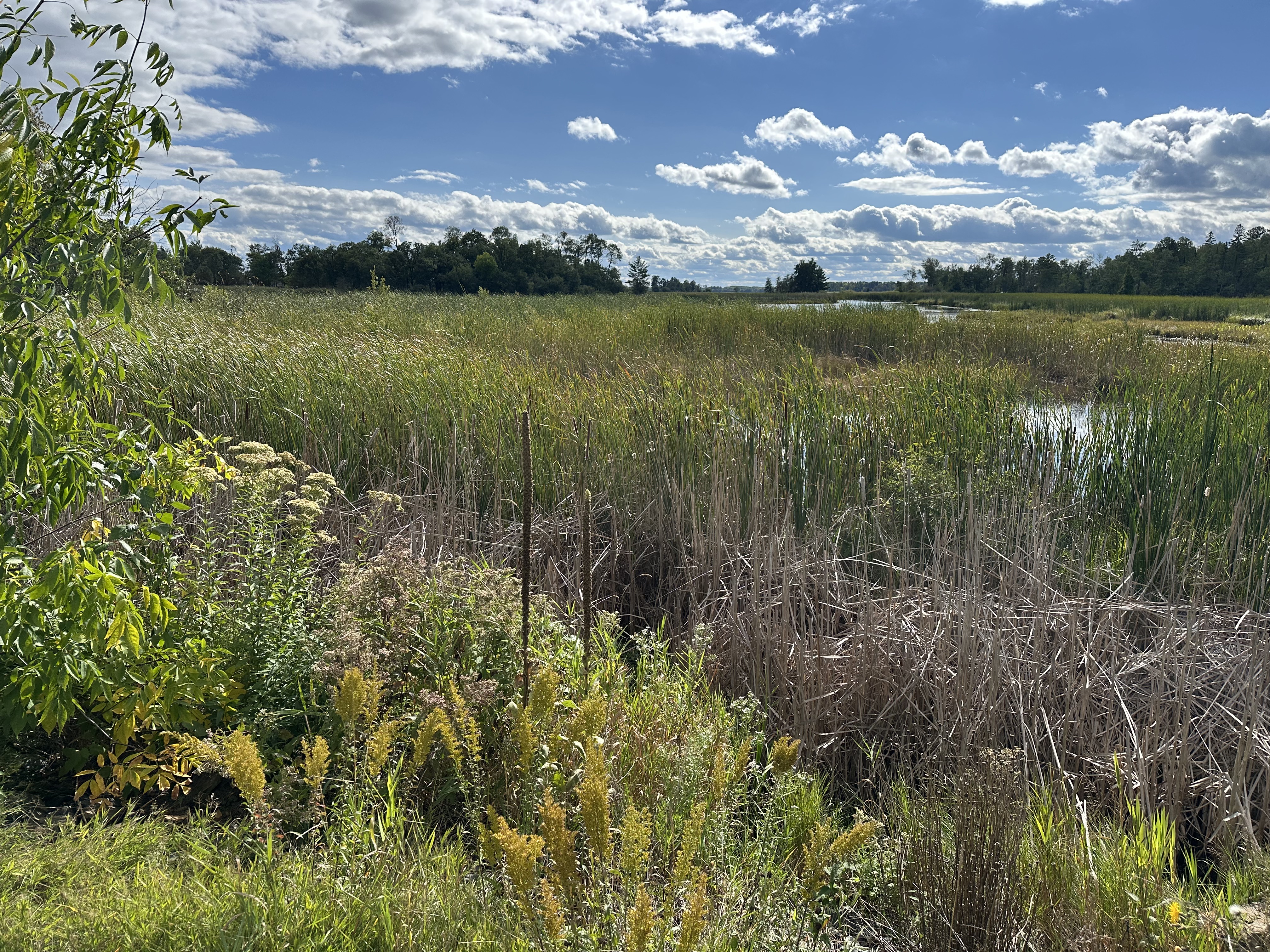
We stopped at the Ash River Visitor Center on our way from Duluth to International Falls, Minnesota. There we tucked in hikes on Beaver Pond Overlook Trail and part of the Blind Ash Trail before the rain. Our lodging was in International Falls, so we headed there

Next day we drove to Rainy Lake Visitor Center. A nice museum is here and an informative film. Voyageurs National Park was established in 1975 and it borders 55 miles with Canada. We hiked the Oberholtzer Trail, heard and saw some birds, and returned to the visitor center. We learned about a boat ride to Kettle Falls the next day, so we signed up!

Kabetogama Lake

Kettle Falls is a historic landmark between Namakan Lake and Rainy Lake. One can only get to this historic area by boat. So 9:30am we were off to visit it with a boatload of other people. During the 2.5 hour ride to the dam a national park ranger spoke about the history of the area and pointed out some wildlife. I was thrilled to see loons!

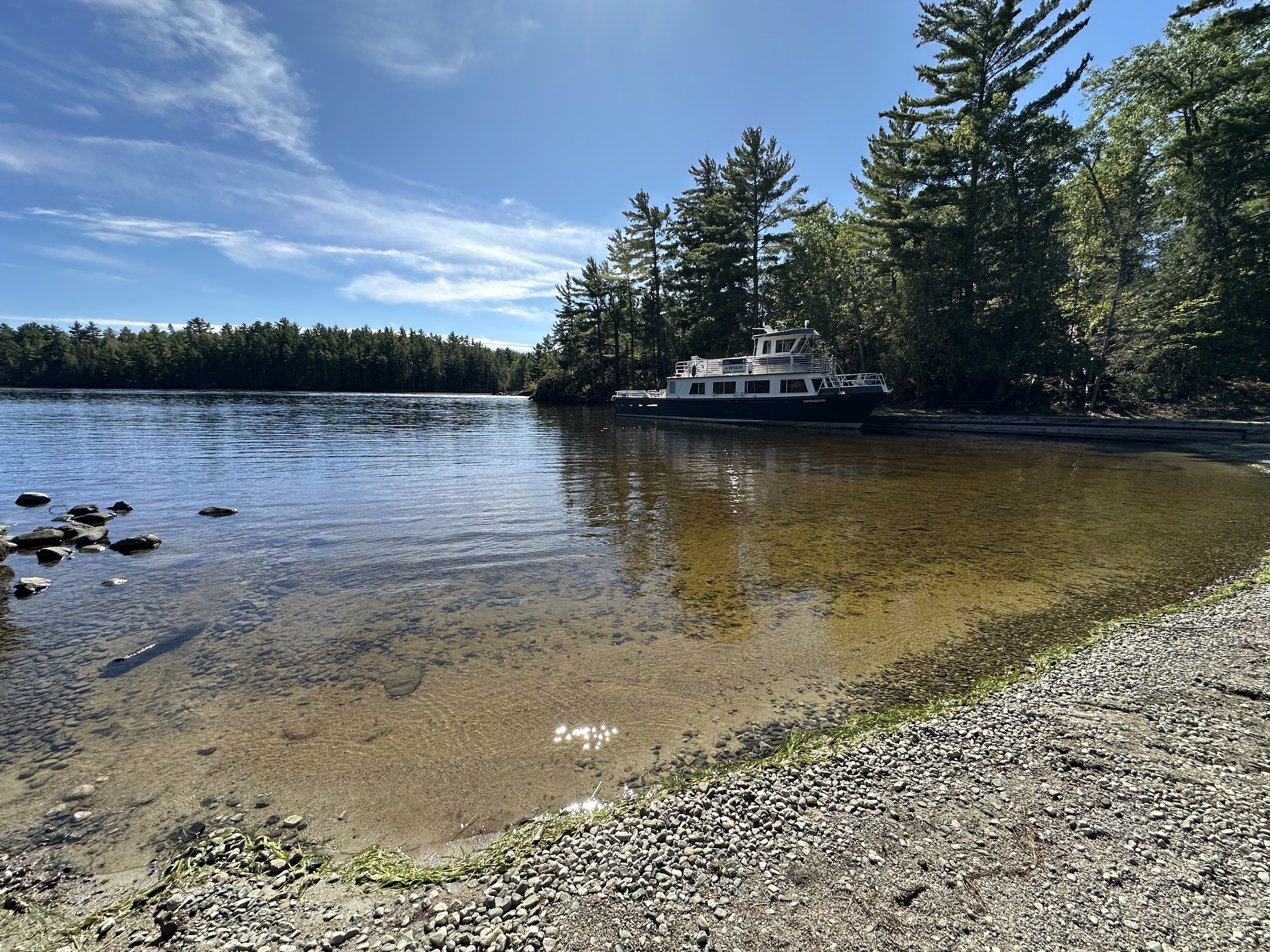
Our boat to Kettle Falls

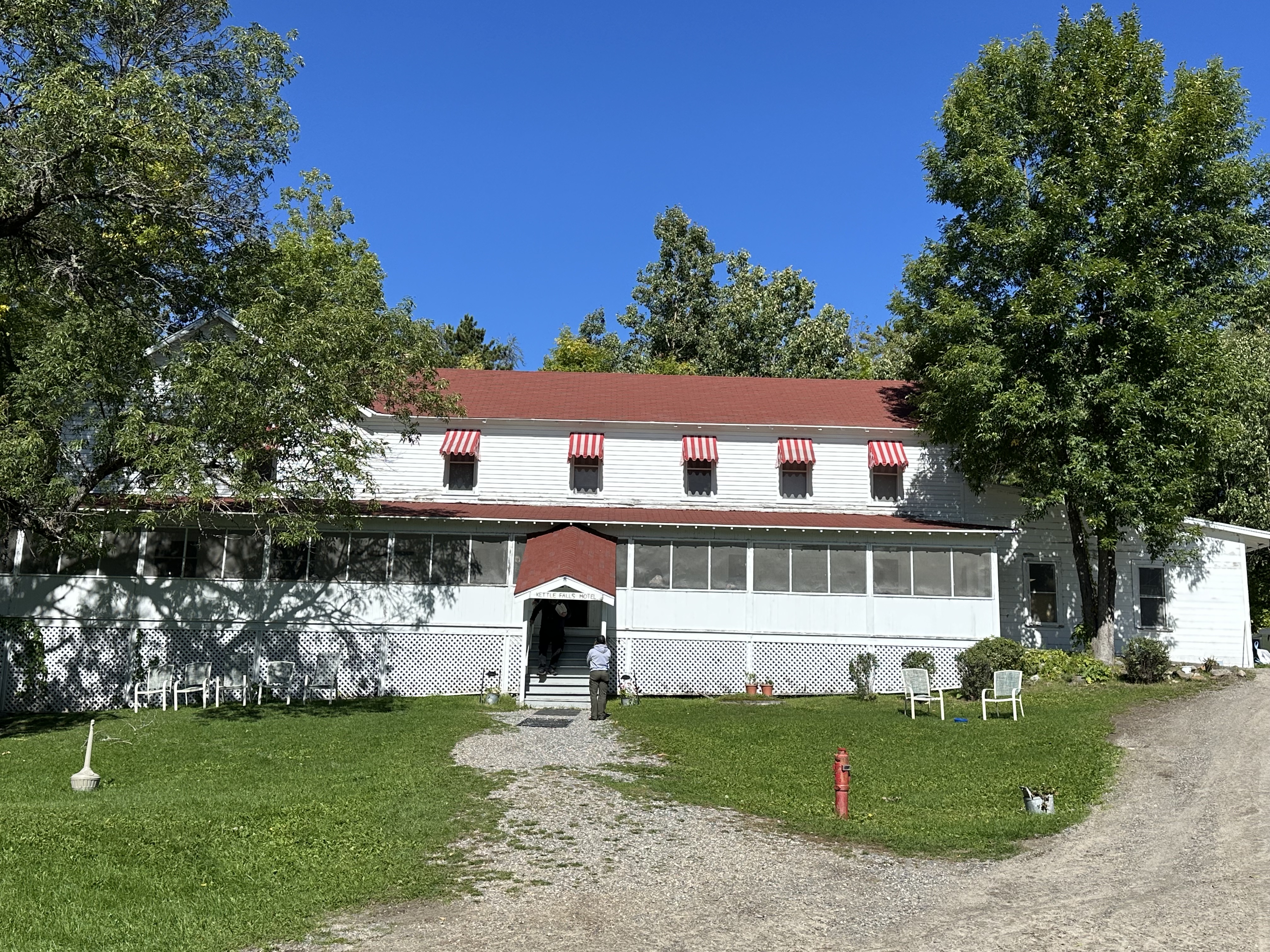
Upon arrival we took a short walk to oversee the “falls” at the dam, then another walk to the historic hotel built between 1910 – 1913. The dam and hotel were listed on the National Register of Historic Places in 1978. I did walk in the saloon to notice the tilted floor, nicknamed the “Tilton Hilton”. You’ll need to notice how they made the pool table level for the players.

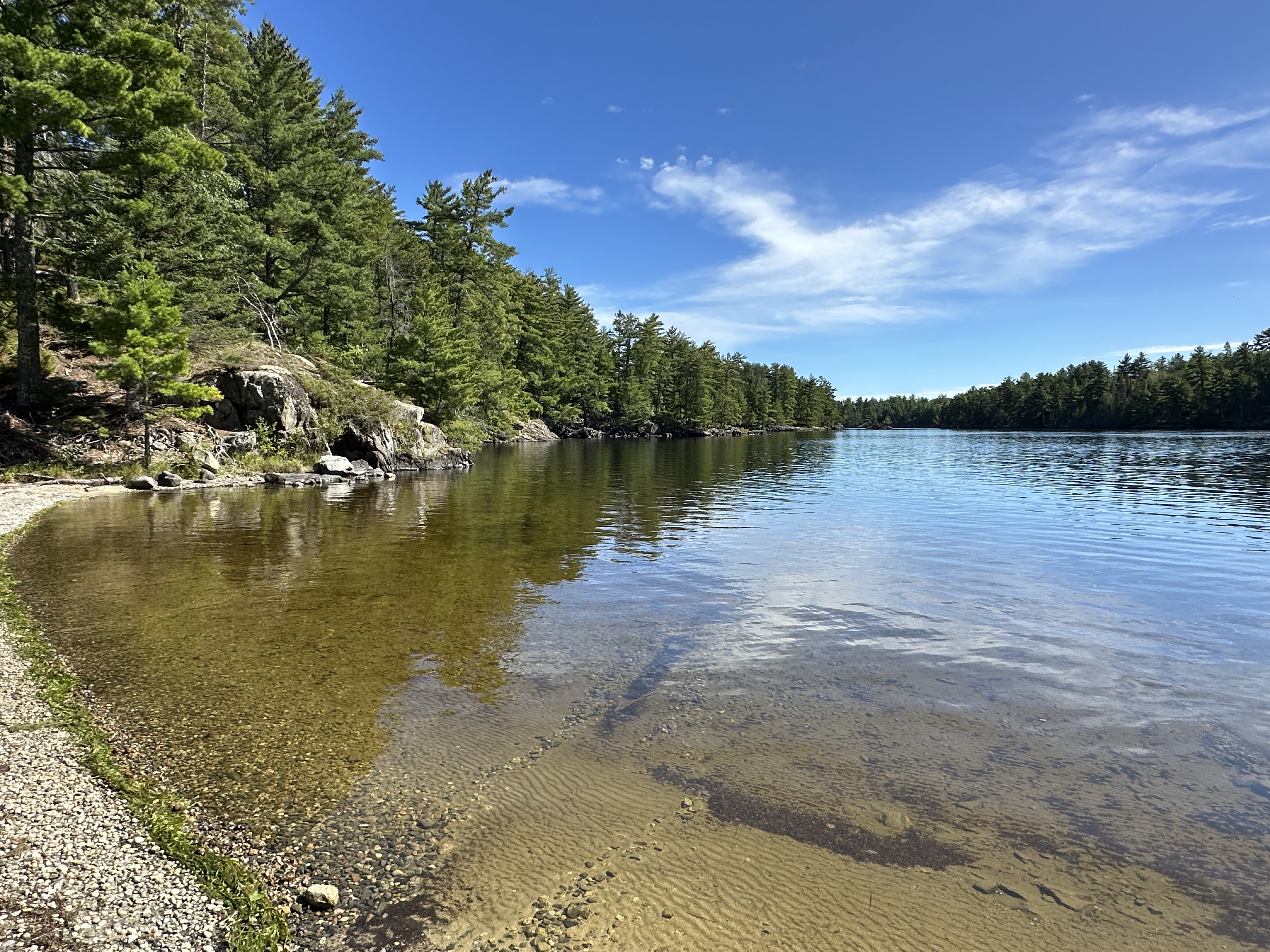
We bought the boxed lunch which was tasty and had time to walk to Namakan Lake before needing to head back to the boat for our return ride. While doing my research about this area, I saw a 1931 report regarding the dam, The dam did raise the level of Rainy and Namakan Lakes by 3- 4 feet, higher than what would have been the naturally flowing water. As a result, this destroyed wild rice beds, flooded private property, submerged spawning grounds and as a result other proposed dams were never built. This was good news for the native people in the area.

Here are some photos from our visit.

Historic hotel
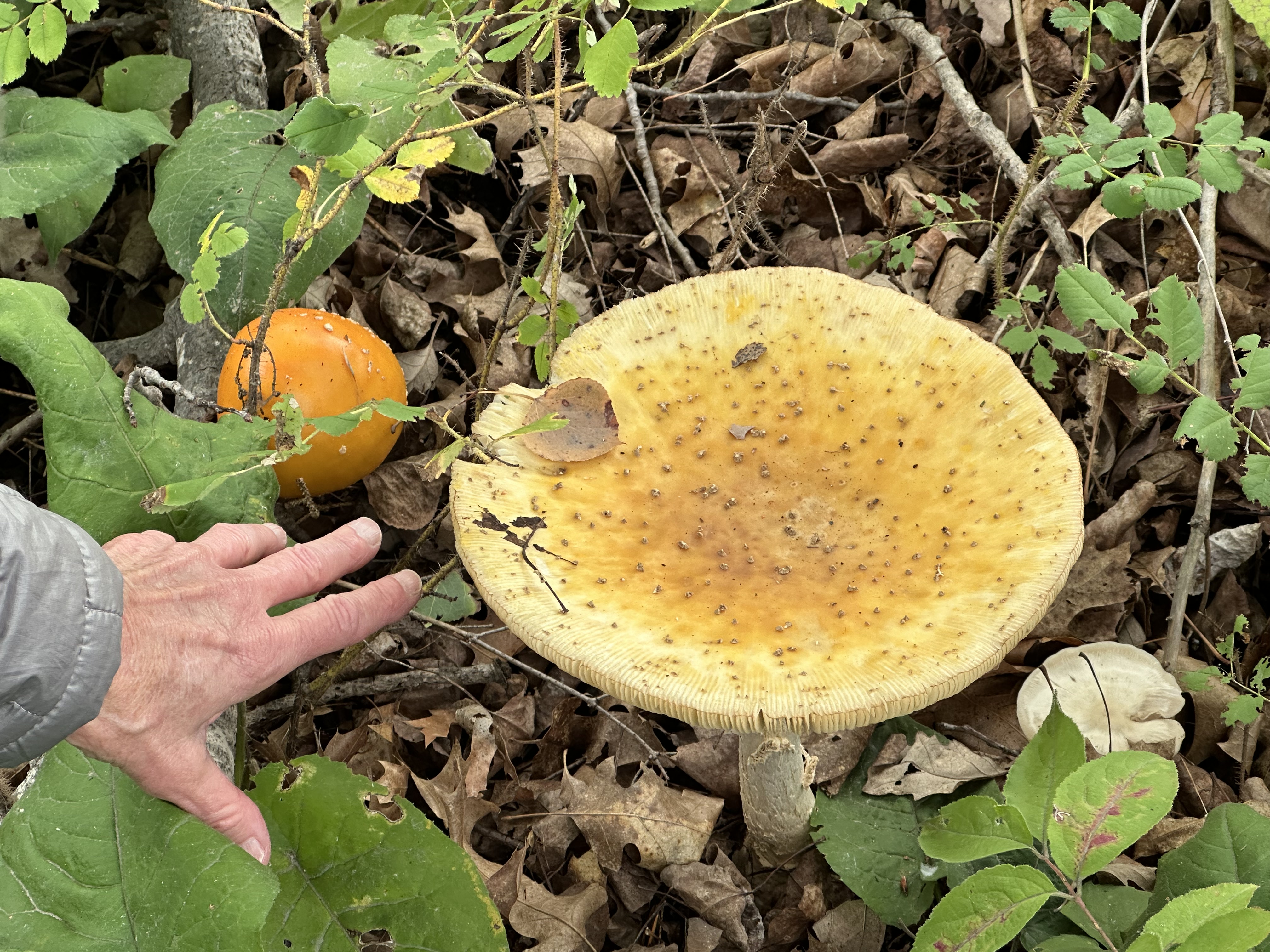
Look at the size of this Amanita mushroom!
Soon time to leave … hop aboard the boat!

Duluth, MN …Who Knew?

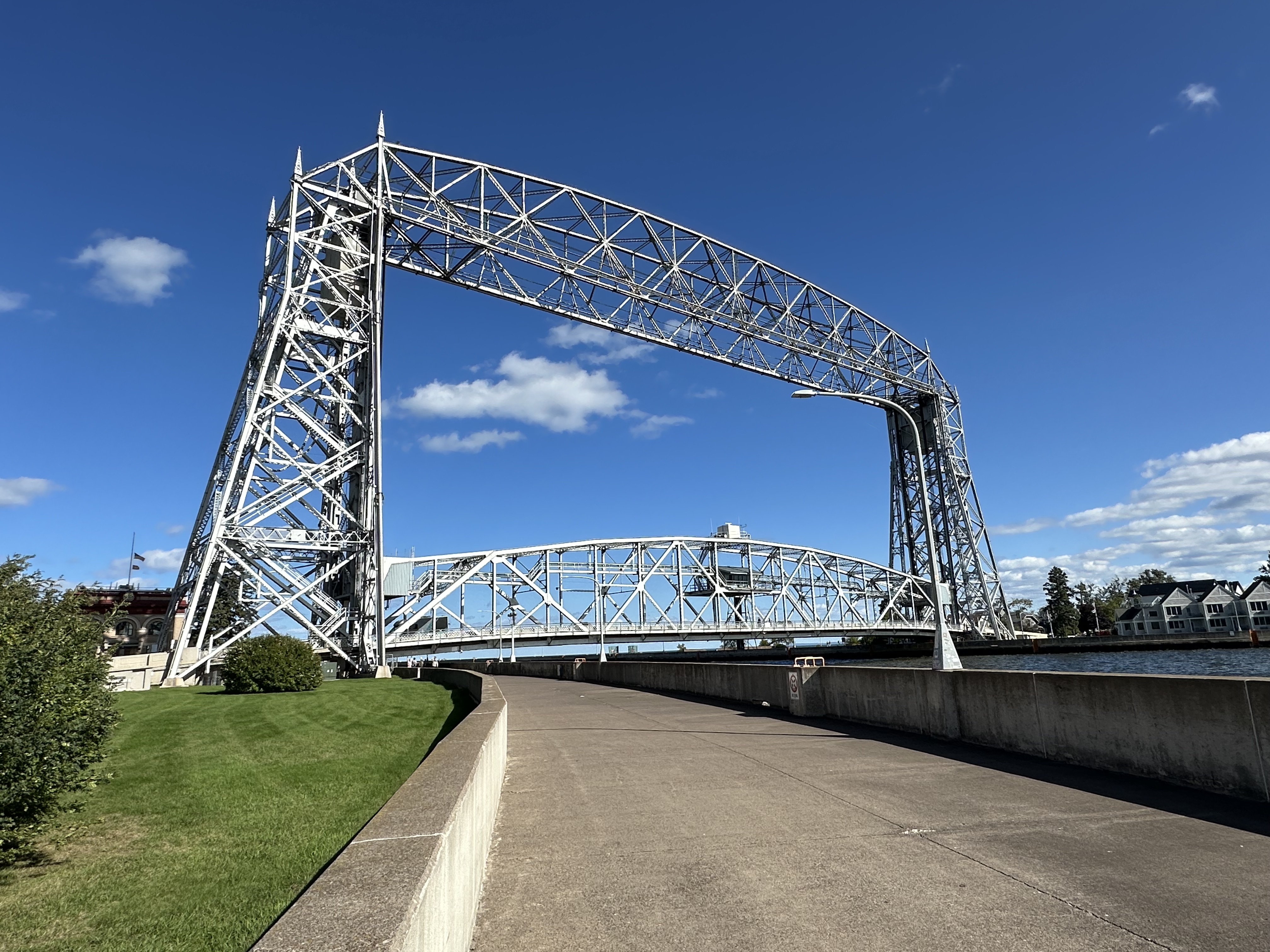
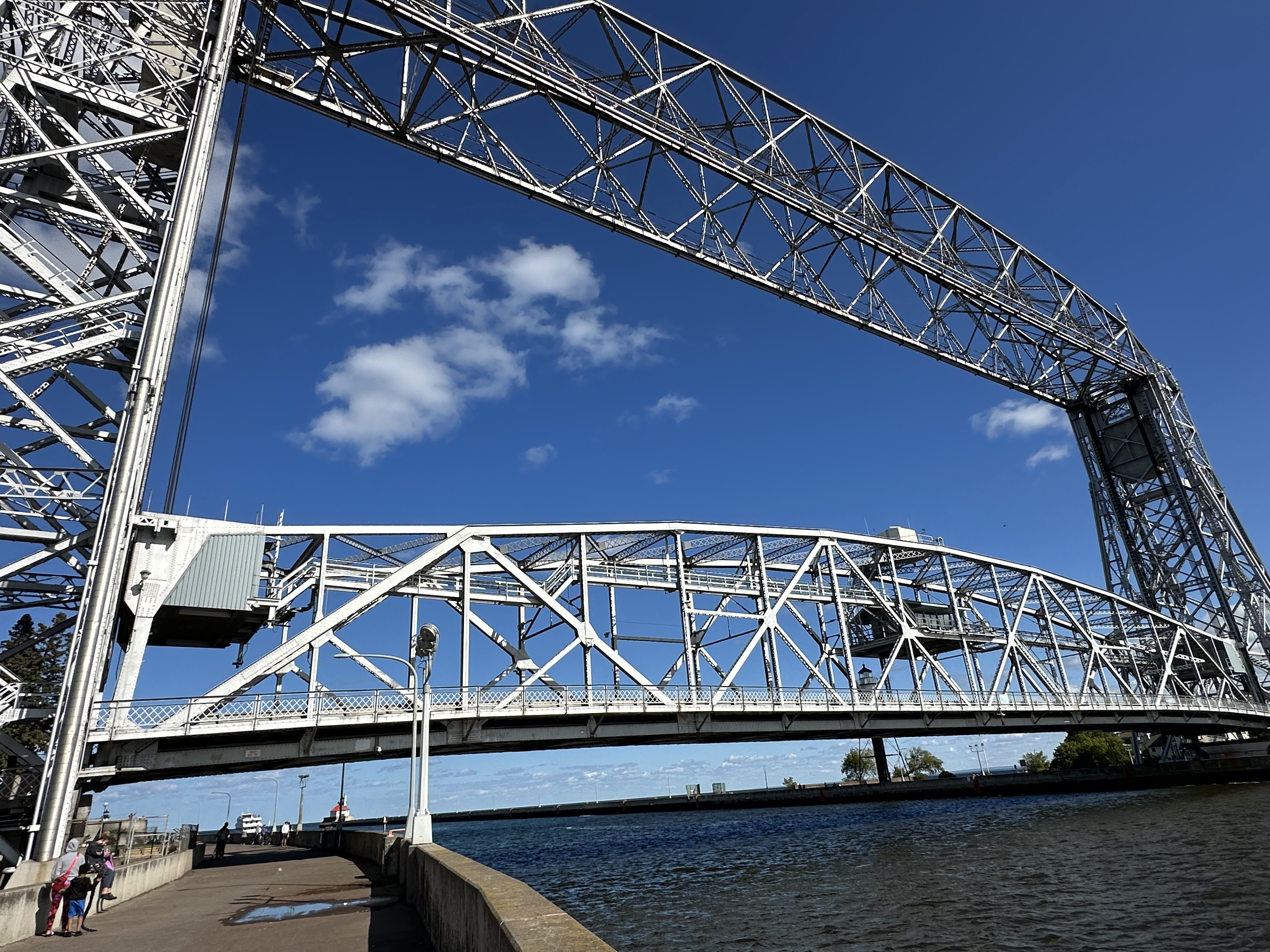
Quite by accident I learned about an aerial lift bridge in Duluth! And there off in the distance as we drove from northern Wisconsin into Duluth I could see the 502 foot bridge! It was originally constructed in 1901 – 1905. Modifications were made in 1929 with the addition of an elevated roadway. Continued rehabilitation of it all was in 1986, 1999, 2007 and 2009.

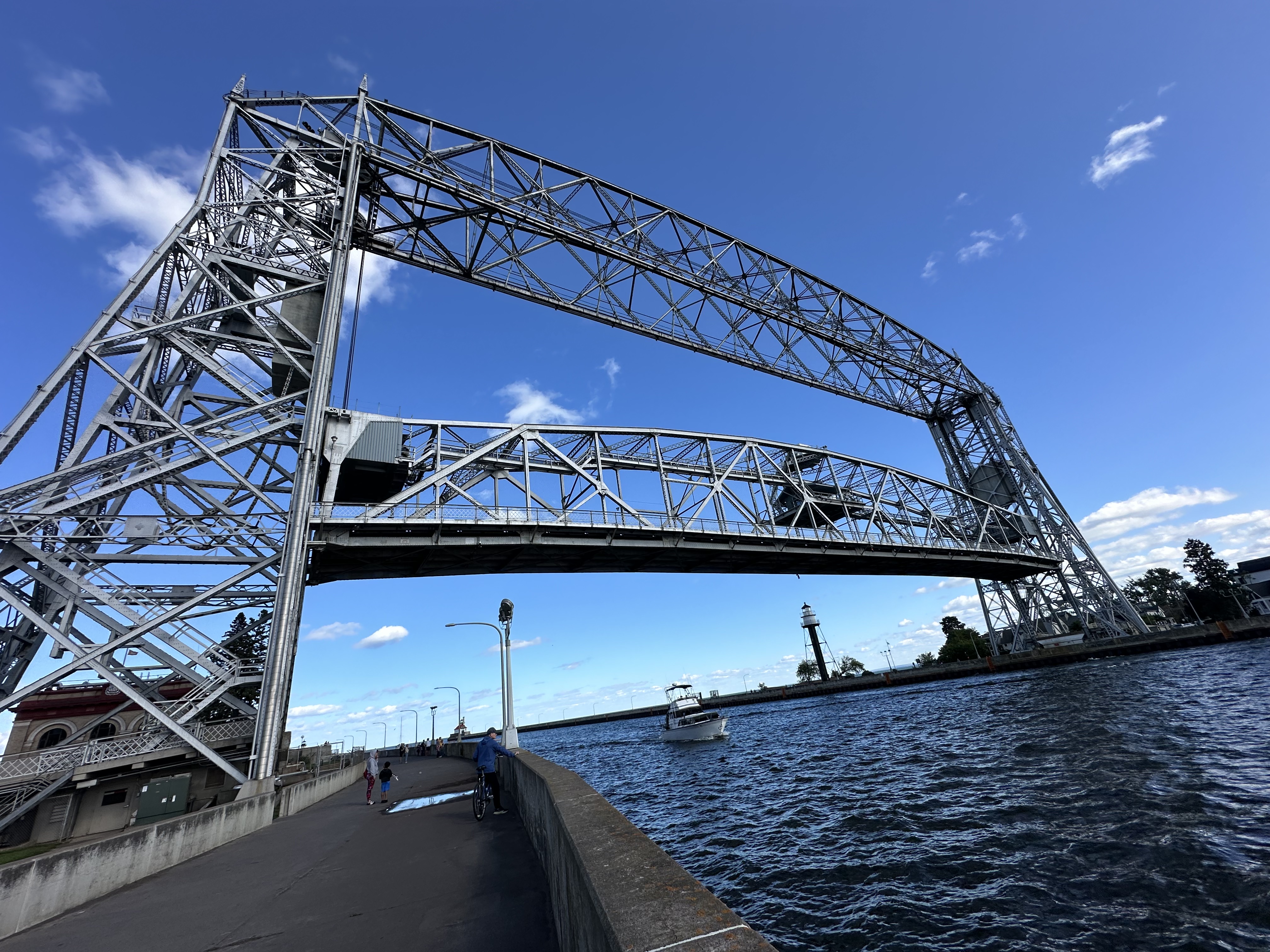
We were fortunate to be standing near the bridge when it came time to elevate it! Vehicles on the bridge were off it. People walking on the bridge were told to get off it. And then the bridge lifted into the air between the two towers; amazing!

Bridge as vehicular and foot traffic travel over the bridge.
Bridge is going up!
Bridge is up to allow boats to pass through.
And it comes back down … amazing and fun to watch!

The second thing I learned about Duluth, Minnesota is they are working to get Dark Sky designation so people can see all the beautiful stars in the sky at night. Fantastic Duluth!

The King’s “Embrace” in Boston

Rev. Dr. Martin Luther king and Coretta Scott King met in Boston in 1952. This statue, “The Embrace”, is a memorial to their love and leadership. It is positioned at the 1965 Freedom Plaza where King led 22,000 people calling on Boston to confront racism and economic injustice. 

This statue reflects the power of collective action, the role of women in the freedom movement, and the forging of solidarity out of mutual empathy and vulnerability.

Elephant Herd at Boston Public Garden!

The herd’s indigenous creators made each elephant from an invasive weed in India: lantana camara. This aggressive plant can be found in TX, FL, CA, Australia, India and inland at the Galapagos. These Indian artisans of the Real Elephant Collective in southern India use the invasive weed to construct the elephants. I tried to capture their work in the photos below. Fortunately I saw the herd on tour in Boston, MA. For more info regarding their next stops, check out: TheGreatElephantMigration.org 

You’ll see one red elephant named “Mayflower”. This elephant is to represent those in the real world when they would turn red when coating themselves in iron-rich clay. They do this to protect their skin from the sun and as a natural barrier against bugs.

Mayflower

It was a wonderful opportunity to see the work of these indigenous artisans, using an invasive weed, and creating a magnificent display of powerful animals! BTW, each sculpture is for sale.

The “Paper House” in Massachusetts 

The “Paper House” in Rockport, Massachusetts was an interesting quick visit. This 1924 house with paper walls and furniture has survived a century! It was a summer camp to live in; only roof, floor and house frame wooden when originally built, the rest from paper.

Paper House

The Stenman family read 3 newspapers per day. With additional newspapers from others, they built this house and made various furniture pieces, such as the grandfather clock. It was built in 1933 from the capital city papers from 48 states at that time:

Clock

Walls were newspaper pages pasted … with mixture of flour, water and apple peels…. with lacquer then applied. Walls were layered 215 sheets thick and were for insulation; now covered to hold the walls in shape.

Visitors to the property can step into the house and see all the created pieces. Some are tightly rolled or folded paper structures, but the piano is real and covered with paper. When you visit, look closely at some furniture and you’ll see historical headlines from the 1920’s.

Need a place to stay for the night? Check out the Blue Shutters in Gloucester

Wish to eat a lobster roll? Check out Charlie’s Place. Take a short hike at Halibut Point… plenty to visit along the coast; enjoy!

Eleanor Roosevelt’s Val-Kill

Eleanor and Franklin D. Roosevelt had another property, Val-Kill, a short distance from the home Franklin grew up in. While Eleanor and Franklin lived with his parents and at the White House, Val-Kill was a place Eleanor started Val-Kill Industries. Here rural youth and underemployed workers learned woodworking. Creating handicrafts allowed farmers to also keep afloat during tough times. She closed the industry down in 1936 and moved in after Franklin’s death in 1945. Eleanor certainly contributed to her husband’s work during his presidency and was called upon by others even after his death. Plenty of history regarding her!

I toured this property and museum and viewed an informative 20 minute film. There are well groomed trails to walk here. It’s a beautiful place!

Stone Cottage for guests
Plenty of conversation around this table!
Beautiful grounds with water and trails.

FDR’s Home, Museum and Library

Franklin Delano Roosevelt was our President for many years (March 4, 1933-April 12, 1945) and lived in Hyde Park, New York where we now find his home and Presidential Museum and Library. Years ago, when at the Walkway over the Hudson River with my friend, we only drove past these places. This trip I toured his home:

His father encouraged him to know birds in the area, so Franklin did learn 300 birds and did taxidermy work too.
Many rooms as he and Eleanor lived in this home with his parents.

The family owned many acres of land which overlooked the Hudson River. Due to numerous trees planted by his family, a river view is no longer as the trees grew nicely through the decades.

Once upon a time one could see the Hudson River.

The Presidential Library is available to researchers and the museum is open to all. Many hours and even days are needed if one was to read all in the museum! It is well done! Videos also available to break up the reading and displays. So many initiatives from Franklin D. Roosevelt during his years as President.

Freedom from Fear.

By the way, Franklin D. Roosevelt’s Presidential Library is the first presidential library ever built.

Did you hear? July 4 of this year the Theodore Roosevelt Presidential Library just opened in North Dakota. Looks great, I’ll have to visit it someday!