Colorado Time … Various Places for Fun!

Colorado landscape varies as you travel south to north in this state. I had snow in the Pueblo area, brisk weather in Fountain and Lakewood, and finally conditions good enough for bicycle rides three days in a row!

Pueblo, Colorado did have some snow. While I was sleeping in my winter sleeping bag in my van, I chose to let solar energy melt away enough of the snow and ice from the windshield before I took off from the campground that morning. I had my newly purchased ice scraper but did not use it. 

Fountain Creek Regional Park and Fountain Creek Nature Center were on my “to visit” list. While the nature center was not open, the numerous trails at the regional park were great! I need to remember this place for future “to stretch my legs” stop and hopefully visit the nature center some day.

Lakewood is where some friends live, but since they were elsewhere I stayed at a Harvest Host location. (If you camp with an RV or camper, more info about Harvest Host is a click away right here.) There I enjoyed conversation with a science teacher and natural/wildlife resource person along with a meal and beer before hitting the sack.

Fort Collins area is my favorite place to bicycle ride from a campground onto the Poudre River Trail. For 3 days I bicycled various parts of the trail plus some trails off the main trail. Temperature was 55 – 60 degrees Fahrenheit, so I kept moving! The wind was more of an issue at times, but as they say … wind at your back is great … did someone say that? Not sure.

Then drove through Nebraska and Iowa to Wisconsin to visit with friends. Here are photos from my Colorado days:

Sunrise in Colorado
Hairy Woodpecker
Bicycling on boardwalk section on the Poudre River Trail
Eastern Fox Squirrel
Favorite place for my meals
Bird watched me while I was eating my entire meal!

Alpacas, Snow and Beer … Never A Dull Moment!

Travel continued; my upcoming days uneventful, thankfully. I enjoyed a night at a Harvest Host location. Alpacas are the most calming animals, so I spent time chatting with them upon my arrival. Then had a good night sleep at this location.

Informative sign.

Weather reports were for snow where I would travel through a mountain pass in a few hours in New Mexico into Colorado. I hadn’t packed my ice scraper on this trip since I was leaving weeks later than past years. Off to an auto store and luckily they had one long-handled scraper and brush. Better to have one and not need it, then to think a credit card could scrape my huge van windshield! 

I drove through snow. Despite reports of low visibility, I got through the mountain pass fine. About 5 inches of snow had fallen as I drove through. The next morning I did have ice on my windshield. Fortunately I parked my van so solar energy could melt the ice by the time I ate breakfast, took a walk at the campground … observed killdeer and other birds, like a beautiful western meadowlark, at this site!

I love mountains. Seeing snow-capped peaks of the Rocky Mountains was wonderful! So fitting also as I was listening to an audiobook: Tap Dancing on Everest by Mimi Zieman, MD. It brought back my memories of travel in Tibet, China and trekking in Nepal to Everest Base Camp so many decades ago. (If you follow mountaineering expeditions, this is a good book to read.)

Snow… but it is melting, yeah!

I stopped at Fountain Creek Regional Park to take a driving break. I walked some of the trails; no snow here! This park and nearby nature center needs to be a future stop. There are plenty of trails and a nature center to visit. Another Harvest Host location for the night. Enjoyed dinner with a beer and talking with fellow travelers from Wisconsin. Great conversation! Now to enjoy 3 days and hopefully bicycle ride. If not, then to at least hike and take a break from driving!

Trail by playground and Ramadas.
Trail by creek and many trails from here. A beaver came up here from the creek?

Reimbursed for Bad Weather!

Bad weather happens when you are home, when you travel, it happens whenever. It’s nature at work; a reality at times. In the southwest USA, we truly look forward to our bad weather being a good rain storm! Is this monsoon season or is this just a good rain? Shall I change my outdoor plans or not?

Recently I was absolutely amazed to have come upon a new item on camping reservation forms! I was making travel plans. Simply I wanted to reserve a campsite in the USA. While entering payment info, this pops up:

This business must be a great idea for the person collecting the money and the camper who needs a guarantee. I needed to reserve a camping site in another state. I knew it would have a different weather pattern so I was curious to see if there is a weather guarantee. Here is what came up:

Okay, a lower per day rate for my 3 day camping stay in this other state, plus it has to rain 3 plus hours. Very interesting! Still, not interested in purchasing the “Sensible weather”. The whole point of being outdoors is to enjoy the outdoors, whatever it may be. Rain, hurricanes, tornadoes, high winds … OMG, maybe high winds is the next need for peace of mind! But I did wonder about the rain at night. How many times did I wish to mountain bike the day after a rainstorm at night and could not ride the trails? (Do not ride your bike on muddy trails as it creates ruts and begins to ruin a trail.) Now that might be a guarantee I would be interested in … or not!

Weather can ruin or force changes in a planned event. I know that; been there myself. Outdoor high school graduations were when I was forced to watch weather patterns across New York State for a week ahead of the event. I am sure people do the same for their outdoor picnic, wedding, or whatever. Just when I think I have seen it all, “Sensible Weather” is now on people’s radar to have, if needed and available in your area. And don’t forget, you’ll still need an umbrella and/or raincoat. (Could it please rain in AZ!)

Birds Need Road to Recovery, Part 2

Birds are declining in population … some faster than others… thus we need to be aware of the issue. Google “state of the birds” or click here or here for two different websites to learn more about the action we should be taking. I appreciated the awareness with an artist who made me aware of the various organizations compiling the information. I continued on with 2 more art pieces for the art project and here they are: Rufous hummingbird is a beauty:

Rufous hummingbird
Pinyon jay is not as often seen as the Steller’s jay, and now I know why!

I was on a roll and added more birds!

Before I get on the road and do some traveling, I decide to look for a few of my favorite birds and see what their status is. I traipsed all over California to find an American oystercatcher. Here is learn it is at the “yellow” alert. This means a large loss of over 50%, but now stable as population has increased over the last 3 generations. It still does require conservation efforts.

The pyrrhuloxia can be seen on few occasions in our backyard, but it is “orange” alert. Apparently there has been a loss of over 75% and still over the next 3 generations. We need to be concerned.

Finally, I love loons. So I checked in on the yellow-billed loon. This is a bird I spent hours looking for while in California. I caught a glimpse and a photo of it while it spent time diving. Unfortunately, this bird is “red” alert. Low population, high vulnerability and population is steeply declining. I surely dd not want to read that information, but now I know!

Birds to be concerned about as I love them!

Bird habitats must be protected. Appreciate the farmers and ranchers who keep their lands open and available for birds to land, reseat and then fly on; greenways are important. We need to not use lead bullets, a cause for California condor and other bird deaths. During bird migration, turn your outdoor lights off so birds are not confused by the light. Add window treatments to your windows so birds do not fly into your windows at home or work.

I am sure there are many more things we can be doing, along with supporting the agencies that are doing the conservation work day in and day out. When I am in a place and I hear not one single bird, it is almost eerie … and then a bird flies in … yes, we haven’t lost the birds! When you think about it … birds need air and land, just as you and I … let’s protect it all for the living things on this earth!

Bird Strikes at Window! Let’s Prevent Them.

A leading cause of birth deaths in North America is window strikes. Almost a half million to a billion birds die from window collisions every year in the USA alone. Birds see what they think is real habitat for them, yet it is a window reflection and not where they should head. Or a transparent glass can create a false appearance of a way for a bird to fly through to another spot. Light can also distract and confuse birds, especially during migration seasons.

Home owners can help protect birds. Here are some ideas:

  1. Break up the reflections by installing external screens or blinds.
  2. Do not put feeders within 3 feet of your window.
  3. Shield outdoor light and direct the light to where it is needed.
  4. Create designs on reflective or transparent windows … here are some ideas: 

Since single decals on a window do not deter birds, it is important to space window designs.

  1. Purchase dotted tape/decal designs or create your own with dots such as those below. Space them 2” by 2” apart.
Space these dots on your window 2 inches apart.

2. Painting a design on your window with tempera paint allows you to be creative. You can use bar soap or chalk markers and switch to match holidays.

3. Collidescape tape can be put onto the exterior of your window glass. Or hanging cords, string, or ribbons at least 1/8 inch in width and spaced 2 inches apart.

After noticing where birds are striking our window, we placed these decals and have had no bird window strikes. I actually did see a bird flying toward the window with the 2 decals and veer off to not strike the window. Then I knew this was a great idea for our windows.

Bird took notice and veered off!
These are placed in an area where birds more often flew into. No longer!

You can make a difference! Please make your windows visible to birds by strike-proofing your windows! If you want more info, check out tucsonaudubon.org/window-strikes The birds and I thank you!

Artful End to My Ecuadorian Visit

Travel memories are held within ones’ mind, photos, writings, and/or possibly their art. And as we know art can take many forms. For me I enjoy sketching, and with some trepidation I approach watercolor paint for added color in my sketches. And so it has happened with my latest international trip to Ecuador. Some art work to bring back great memories as I look upon a sketch.

Some sketches are on a page for the Amazon rainforest period of the trip and another for the Galapagos Islands. The trip as a whole was a wonderful experience, despite my failing snorkeling attempt. Will a third snorkeling attempt be the charm of success? Time will tell.

In the meantime, here were my sketches … as you also remember I am a budding artist … or am trying!:)

Amazon sketches
Galápagos Island sketches

Did you miss my Ecuadorian travel in this blog? You can read about my school visit in the Amazon here. Or visit with an Ecuadorian family who live in the Amazon here. Then follow the posts after these for more time I had at the Galápagos Islands. Or plan a future trip for yourself and visit Ecuador!

Galápagos Wildlife, Beyond Birds

Galápagos Islands offer a safe haven for wildlife, plus some wildlife you will only see on a Galápagos Island. As we walked the trails along an island’s shoreline or inland, we saw yellow land iguanas, marine iguanas, Sally lightfoot crabs, sea lions, Galápagos fur seals, giant tortoise, and Pacific green turtles all in the wild!

Sally lightfoot crab
Galápagos fur seals
Golden rays
Marine iguana
Yellow land iguanas
Giant tortoise
Panamic cushion star

Many of my fellow travelers enjoyed snorkeling at various locations. That activity is not for me so I could only enjoy their information with some underwater photos and stories. Lots of fish and rays were seen, but the white-tipped sharks seemed to be their most unsettling observation. No harm done; it seems the 17 sharks or so may actually have been sleeping …. And apparently it is the black-tipped sharks one should be concerned about.

Ecuador’s Amazon

We flew from Quito to Coca, then hopped on a motorized canoe to ride an hour to our eco-lodge. The lodge is located on a tributary off the Napo River which is a tributary of the Amazon River. This is the Amazonian rainforest where one needs a machete when not walking on an already established trail. We stayed on private property at this eco-lodge. Three nights at the lodge were luxurious!

We took numerous nature walks during the days. Wearing Wellies (rubber boots) were helpful so wet material, ants and whatever did not get on or in our shoes. We saw sloths, frogs, toads, termites, monkeys and birds while also learning about the plants used for food and/or medicines. Definitely stay away from bullet ants; apparently their bite really hurts!

Frog
Local guide in our motorized canoe

One night we took a boat ride and were surrounded by fireflies! They were flashing their lights as we remained silent to hear the sounds of the jungle. I loved this time.

We had no electricity at the lodge due to a recent break in the electrical line, but the lodge ran a generator from 6AM to 10AM and again at 6PM to 10PM. I appreciated the less electricity and no WiFi to truly have a sense of being away from it all. I mean, we are in Amazon’s jungle after all!

Where we stayed was a private preserve. Across the river we noticed the flames of natural gas being burned off as oil companies do their work. It’s a controversial topic here in Ecuador. 

The Amazon days were busy as we maneuvered around the area. We saw a three- toed sloth, squirrel monkeys, toads, frogs, beautiful blue morph butterflies, termites, bats and centipedes.

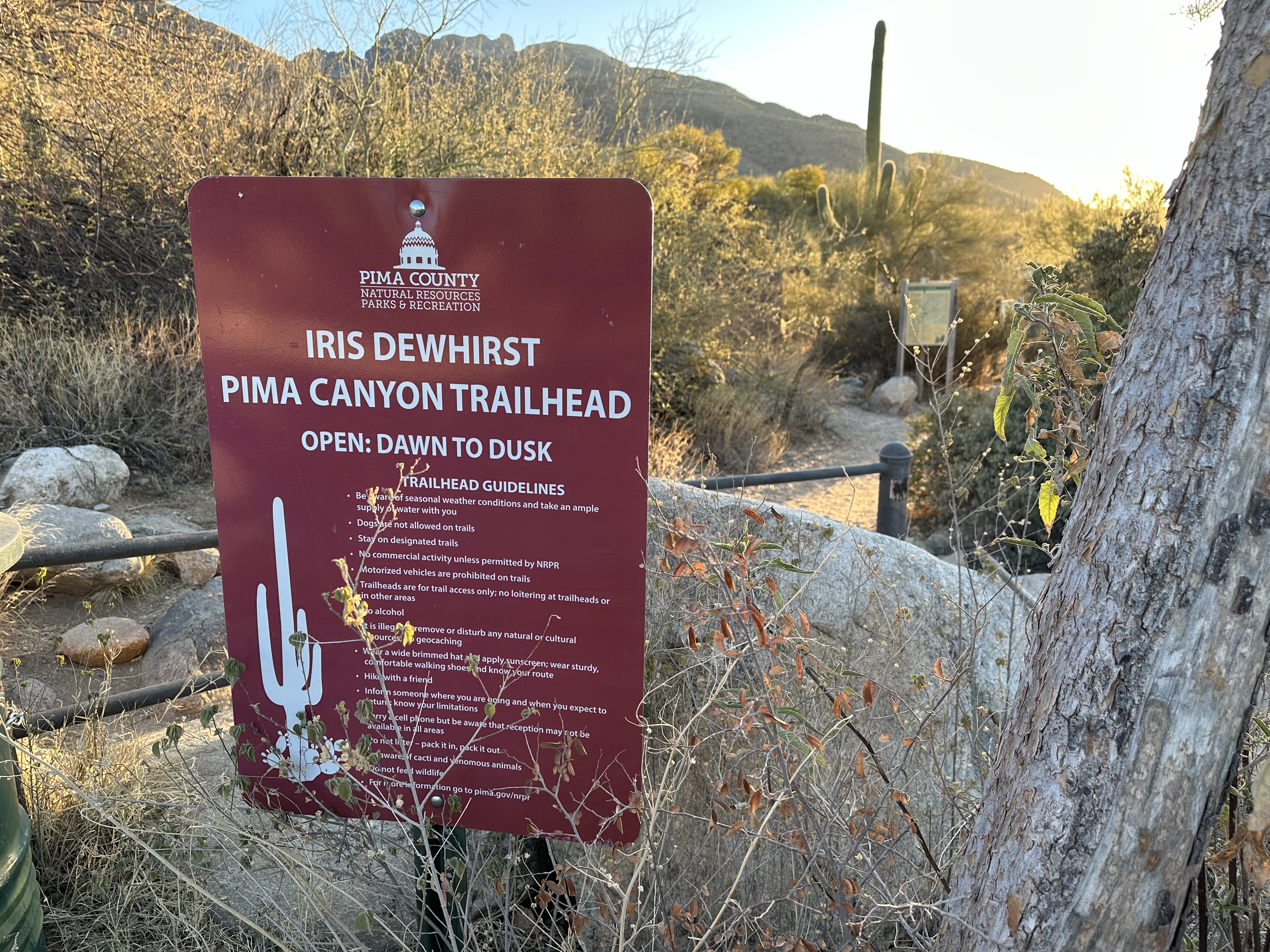
Welcome to Iris Dewhirst Pima County Trailhead

Always looking to hike in various areas around Tucson, Arizona, I decided to hike from the Iris Dewhirst Pima County Trailhead. An environmental education Pima County staff person and I met at the paved parking lot. It’s a huge lot capable of holding 45 vehicles.

No dogs allowed.

The first 1700 feet of the trail is owned by Pima County. Then we enter Coronado National Forest. It’s a rocky trail with some short climbs, but otherwise an easy trail for the first couple of miles. You’ll see other hikers and trail runners out on the trail even during mid-week. If you continue into the Pusch Ridge Wilderness it does have a substantial elevation gain, so do your research as you decide what distance you wish to hike. Also know, between January 1st to April 30th, it is prohibited to travel more than 400 feet off the Forest Service trails for bighorn sheep lambing season.

So who was Iris Dewhirst? She was on the Pima County Board of Supervisors between 1984- 1988 representing District #1. While interested in mental health issues, the YMCA, recycling and libraries, she also wanted to protect desert environs. Her goal was to have buffer zones between housing development and the natural resources, such as the national forest lands.

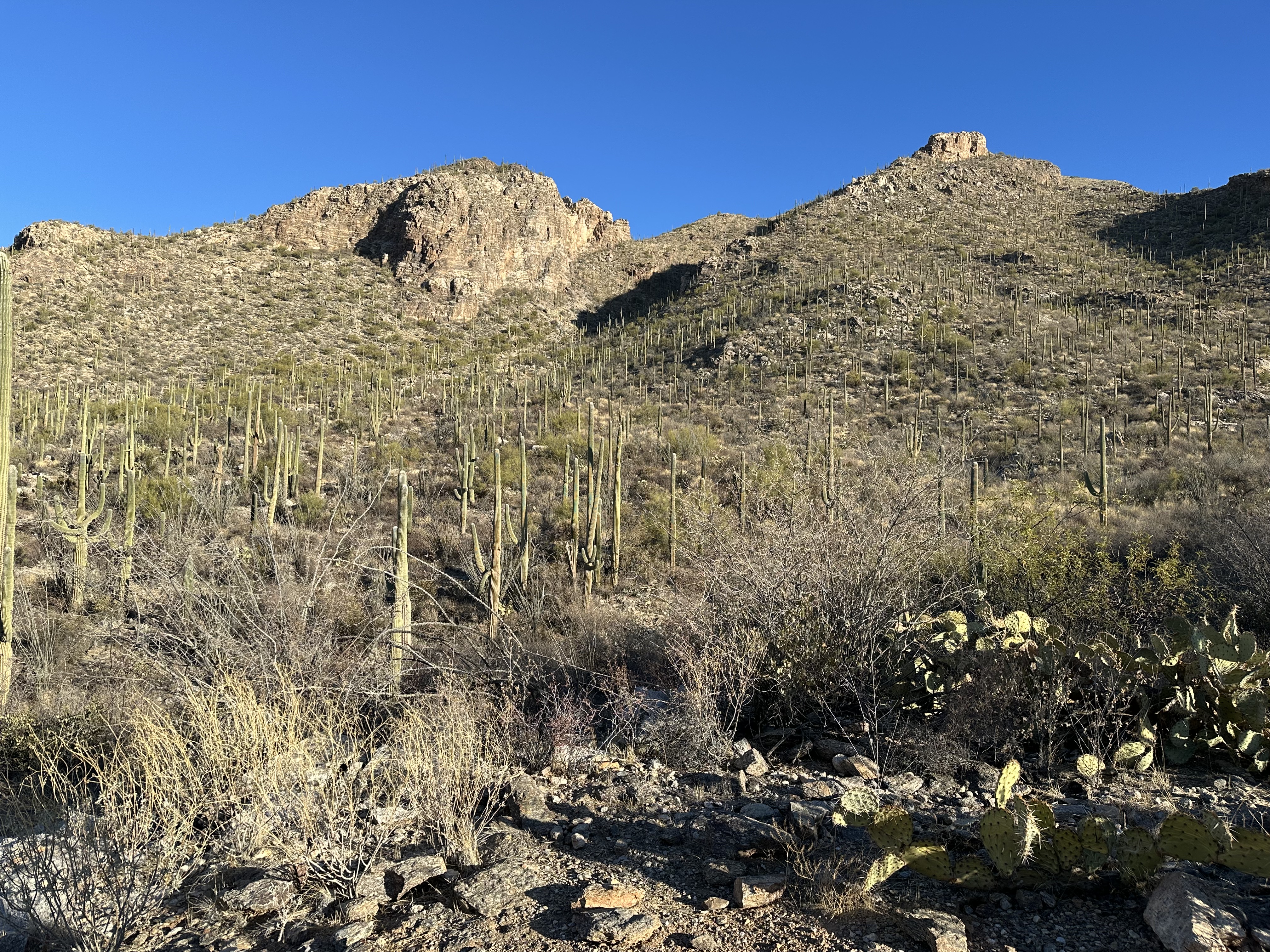
As you hike the trail it is very obvious that you are near backyards of many homes, but walking further into the wilderness to be away from them. Their sight and sounds soon are nowhere to be seen or heard and it was wonderful. This trailhead and trail though are the only way to access Pima Canyon! Thankfully Iris Dewhirst helped create this access.

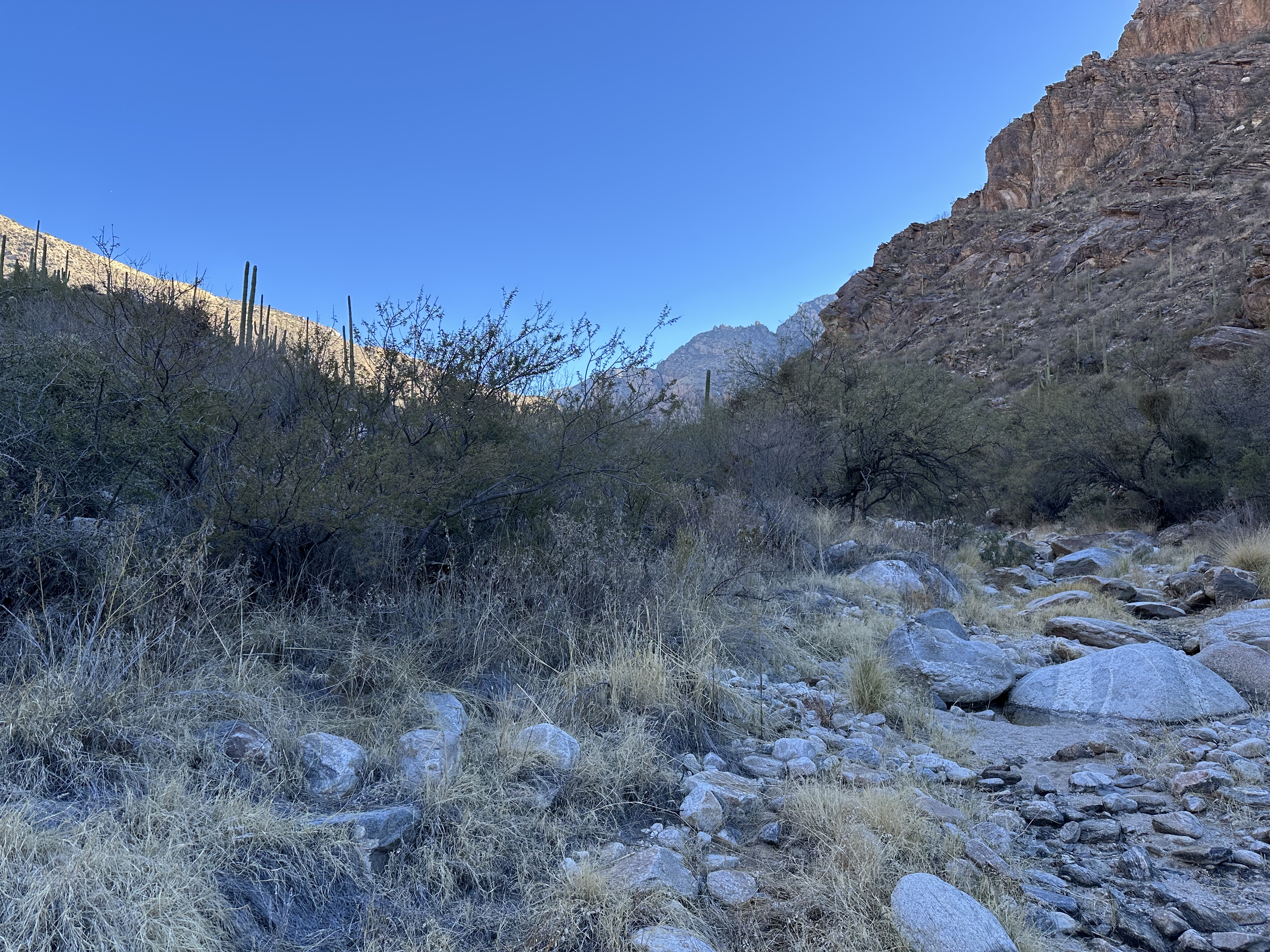
We looked for bighorn sheep; saw none. Enjoyed seeing some wildflowers and found a couple of pockets of water where cottonwood trees loved to be too.

Turpentine bush
Walking in the wash at a point

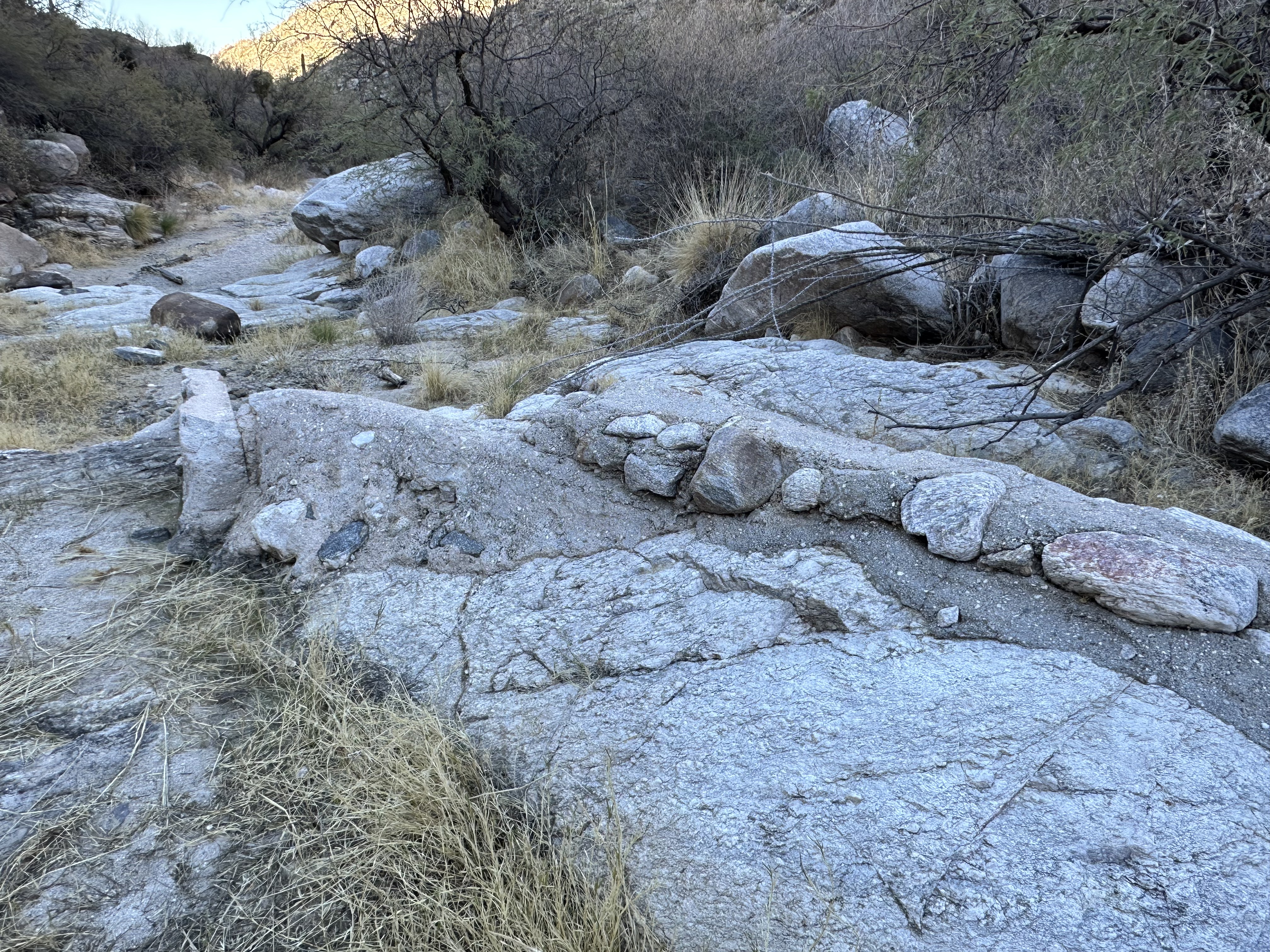
Amazingly there was a dam built many years ago. If you look closely at the next 2 photos you can see both sides of the dam.

Thanks also goes to Iris Dewhirst for creating Tortolita Mountain Park. I have to add that to my future hike list. I appreciate having individuals in the world that work to protect natural resources. Otherwise, we would have housing right up to mountain tops and wildlife would have no place to live. And our hiking areas would be gone too! Let’s protect our lands for all to use!

Seaweed … Is It The Best New Thing?

Two different seaweed uses popped on my radar recently.

One, was a sweater made with seaweed. Well actually seaweed with wood pulp. The Oliver Charles company is blending seaweed with a Lyocell wood fiber. Their sustainable fiber is then used in the making of summer sweaters. The website is interesting. Yak and merino wool are also used in some of their products for colder wear. I love any product one can wear for weeks at a time with no smell! Also know, you can become an Oliver Charles field tester. I read the challenge(s) and they sound like fun! 

Second, was an Earthshot presentation from NOTPLA. That means not plastic. They are using seaweed to create liners for boxes and small containers for liquids. It’s a low carbon resource and biodegradable product. Research is currently happening for it to be brought to a larger scale. We surely know packaging is not going away anytime soon. Another product is Ooho. I love this idea of a single-use plastic sachet with water in it as they hand them out to marathon runners! They are being tried in Europe and may come to the USA. But the seaweed membrane is so delicate there may be limited use opportunities. Look for a seaweed-coated liner in a future food package as that is their main goal.

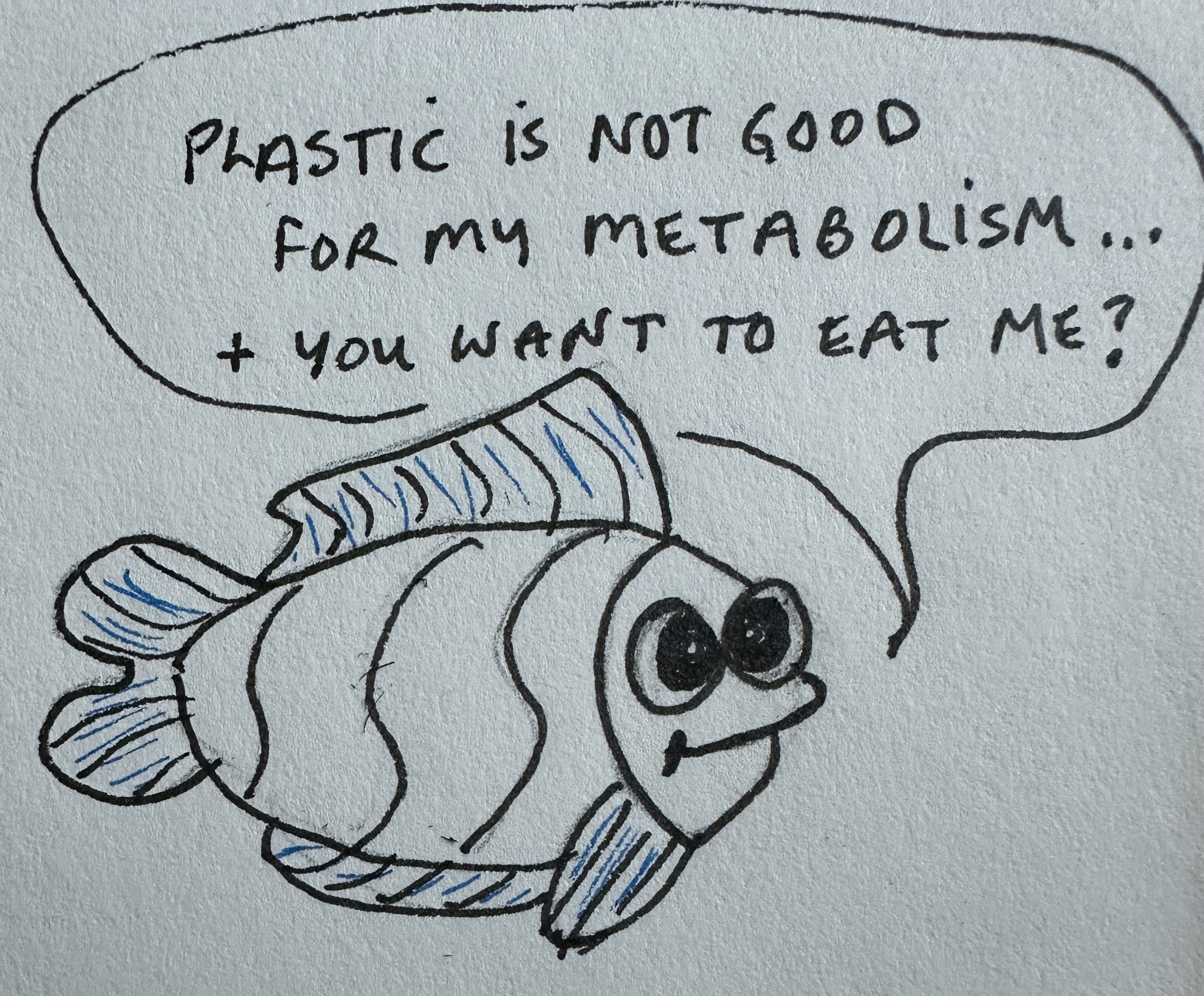
Seaweed grows quickly in all types of water. Let’s keep our waters healthy for it to grow. And let’s support the companies trying new ideas and creating sustainable products. Eliminating/reducing our need for plastic would help too. We keep talking about the plastic bags we should not be using. Our plastic waste takes hundreds of years to decompose. There are small bits of plastic in our waterways that fish are eating and thus we are too! Plastic has been around for more than 150 years. We know the ill-effects of it all. 

Finally, it’s not just about plastic bags. Plastic is everywhere. It’s about us caring for our environment and doing what we can to make/keep it healthy. Seaweed is now considered in product development … not just in the food we eat!