
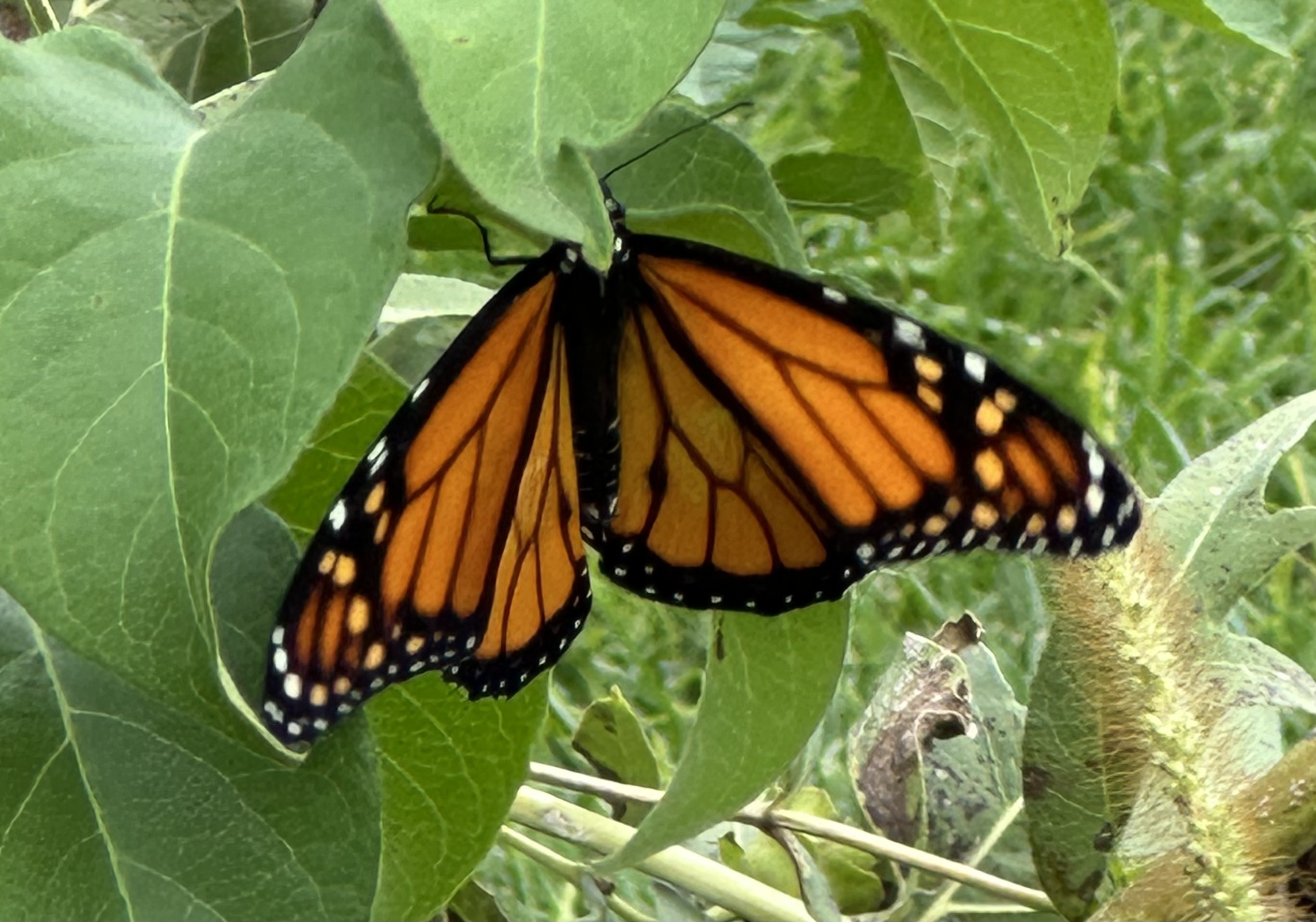
Let’s zero in on the monarch butterflies on the eastern side of the Rocky Mountains. These butterflies migrate 3,000 miles from North America to Central Mexico! (Those west of the Rocky Mountains migrate a shorter distance from California to Mexico.)
Anyway, I started to be fascinated about the monarch butterfly migration after a stop at Crane Trust Nature and Visitor Center in Wood River, Nebraska. The last time I visited here it was a March day during sandhill crane migration. But on this visit now, I was learning how to tag monarch butterflies. A very patient director of the center explained to all of us assembled how to catch then tag a monarch butterfly. Then we had an opportunity to give it all a try.


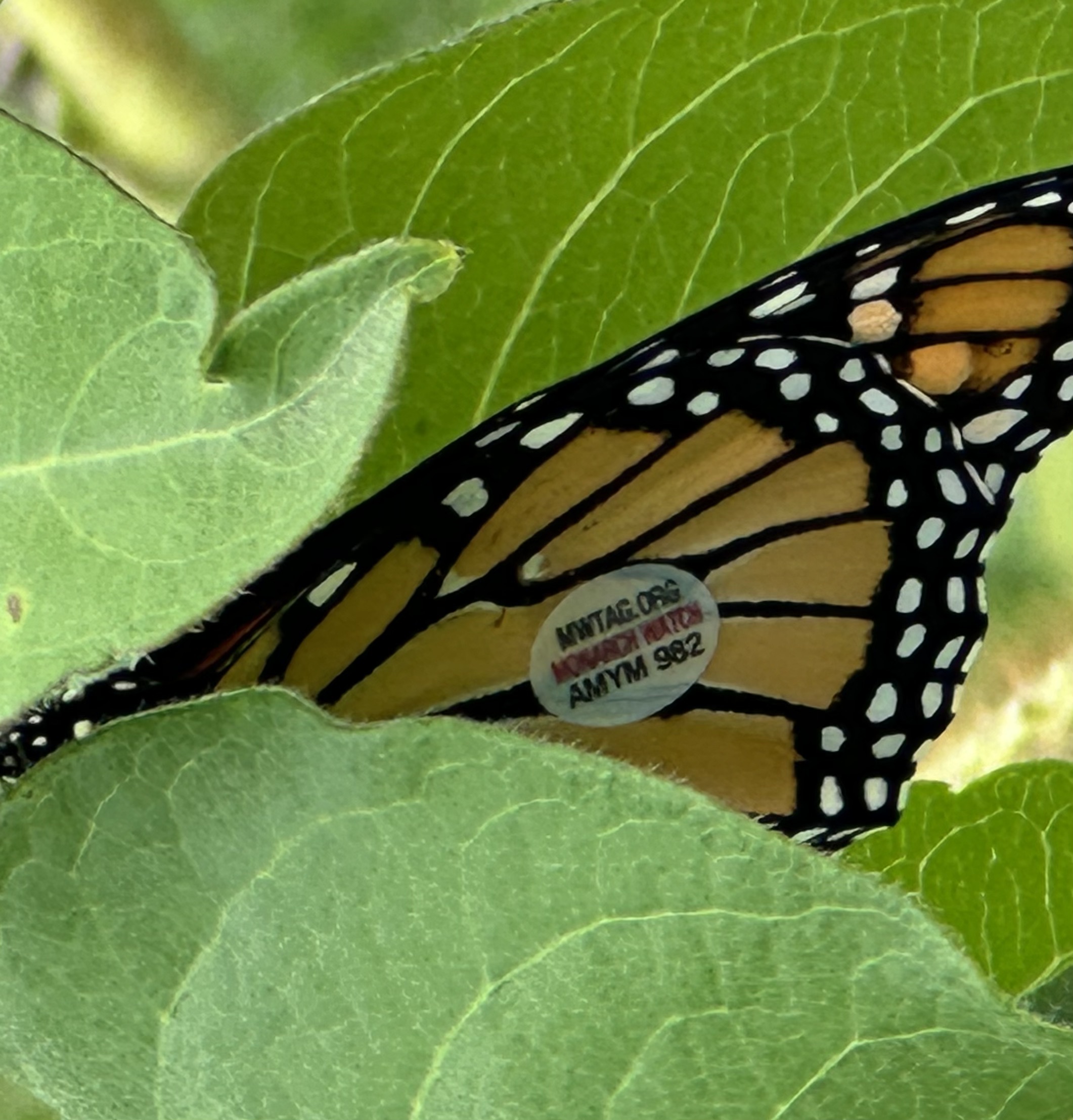
I also learned about two apps: Monarch Watch where you’ll see over a million monarch butterflies tagged. At this app you submit your tagging data or report found tags. The other app: Project Monarch is where they use the smallest transmitters to track monarchs. The website: https://celltracktech.com is very informative about the use of the technology just in the last couple of years! I’m following two monarch butterflies at the Project Monarch app and see many more across the USA. My recommendation is to check both apps! All of it is fascinating.
The other amazing thing I learned is the life cycle of the monarch butterfly through the different generations. I have planted milkweed plants hoping to do my part in their growth, but I needed to understand how and when it is that these butterflies fly the great distances. Here is my understanding in a nutshell:
Monarch butterflies only live 2 – 6 weeks during the summer as adults. In mid-August though, the migratory generation can live up to 9 months. It’s these monarchs that emerge, do not reproduce and begin their migration south to an overwintering site they have never been to in Central Mexico! By early November they arrive in the oyamel fir trees on the south and southwest facing mountain slopes. Here they survive the winter. (Some day I will get to Mexico to see the butterflies in the trees!)
In March, these butterflies travel to Texas and southern states, lay eggs and feed as they migrate and breed. This first generation from the overwintering population continues the journey north in late April and May. Second and third generations populate breeding grounds during the summer. It’s the fourth generation beginning in mid-August to be the non-reproducing ones heading south to the over-wintering site. Amazing!!
So I will learn more about monarch butterflies as they roost in Central Mexico this winter. And I’ll look forward to seeing or detecting tags and/or transmitters next spring! Wow, what a fun activity to learn more about!